SinoGreenTech Academic Portal
🏛️ Indexed Academic JournalOriginal: 电力自动化设备

Power Automation Equipment

Access authentic peer-reviewed engineering methodologies, experimental datasets, and scientific literature published in this journal on SinoTechIntel.

Total Research Papers: 22
Access: 100% Free Open Access
Browse by Publication Year & VolumeReset All Filters ✕
Select Specific Issue:

Published Research PapersFiltered: Year 2026 • Vol 46

Showing 22 of 22 peer-reviewed papers with full Graphical Abstracts.

Original ResearchVol 46, Issue 8 • pp. 100-112DOI: 10.16081/j.epae.202607003Jan 15, 2026

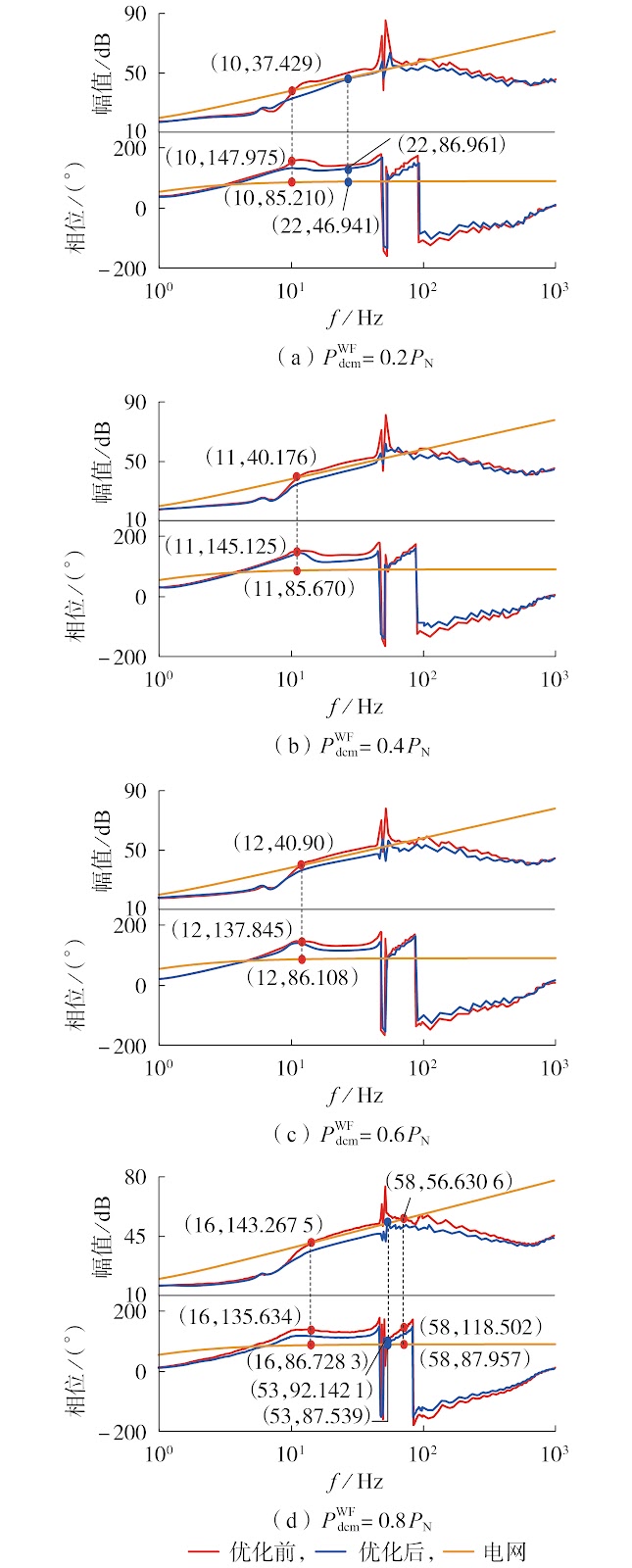
Impedance Modeling and Parameter Optimization Method for Wind Farms Considering Station-Level Control

Authors: LI Jingwen, XU Hengshan, HUANG Yongzhang, LI Chenyang, WU Yangyang, NAN Dongliang, ZHAI Baoyu, ZHANG Lei

Large-scale wind farms integrated into weak grids are susceptible to broadband oscillations, a problem that existing impedance models and control parameter optimization methods fail to address systematically because they neglect station-level control and frequency coupling effects. This paper proposes a station-level control strategy based on available power allocation and an adaptive compass search (ACS) algorithm for optimizing station control parameters. A sequence impedance method incorporating frequency coupling effects establishes the aggregated wind farm impedance, and the grid-connected multiple-input multiple-output (MIMO) system is decoupled into positive- and negative-sequence single-input single-output (SISO) impedance models. A high-precision wind farm impedance model that accounts for station-level control is constructed, and the Nyquist criterion evaluates the suppression effect of station control on broadband oscillations. The ACS algorithm optimizes station control parameters to enhance the adaptability of wind farm impedance to external grid impedance, thereby reducing oscillation risk. RT-LAB platform simulations validate the impedance modeling method and control parameter optimization. Results demonstrate that considering station-level control yields a high-precision wind farm impedance model. Compared with genetic algorithm (GA), particle swarm optimization (PSO), grey wolf optimizer (GWO), and sparrow search algorithm (SSA), ACS is more suitable for optimizing wind farm control parameters. Under specific weak-grid conditions, ACS-optimized station control parameters effectively improve grid-connected stability of the wind farm.
Impedance Modeling and Parameter Optimization Method for Wind Farms Considering Station-Level Control
Graphical Abstract
Original ResearchVol 46, Issue 8 • pp. 100-112DOI: 10.16081/j.epae.202605019Jan 15, 2026

Active and Reactive Power Coordinated Voltage Support Control Method for High-Inertia Energy-Storage Synchronous Condenser

Authors: OUYANG Jinxin, YE Zhiqi, YAO Jun, LIN Yaowei

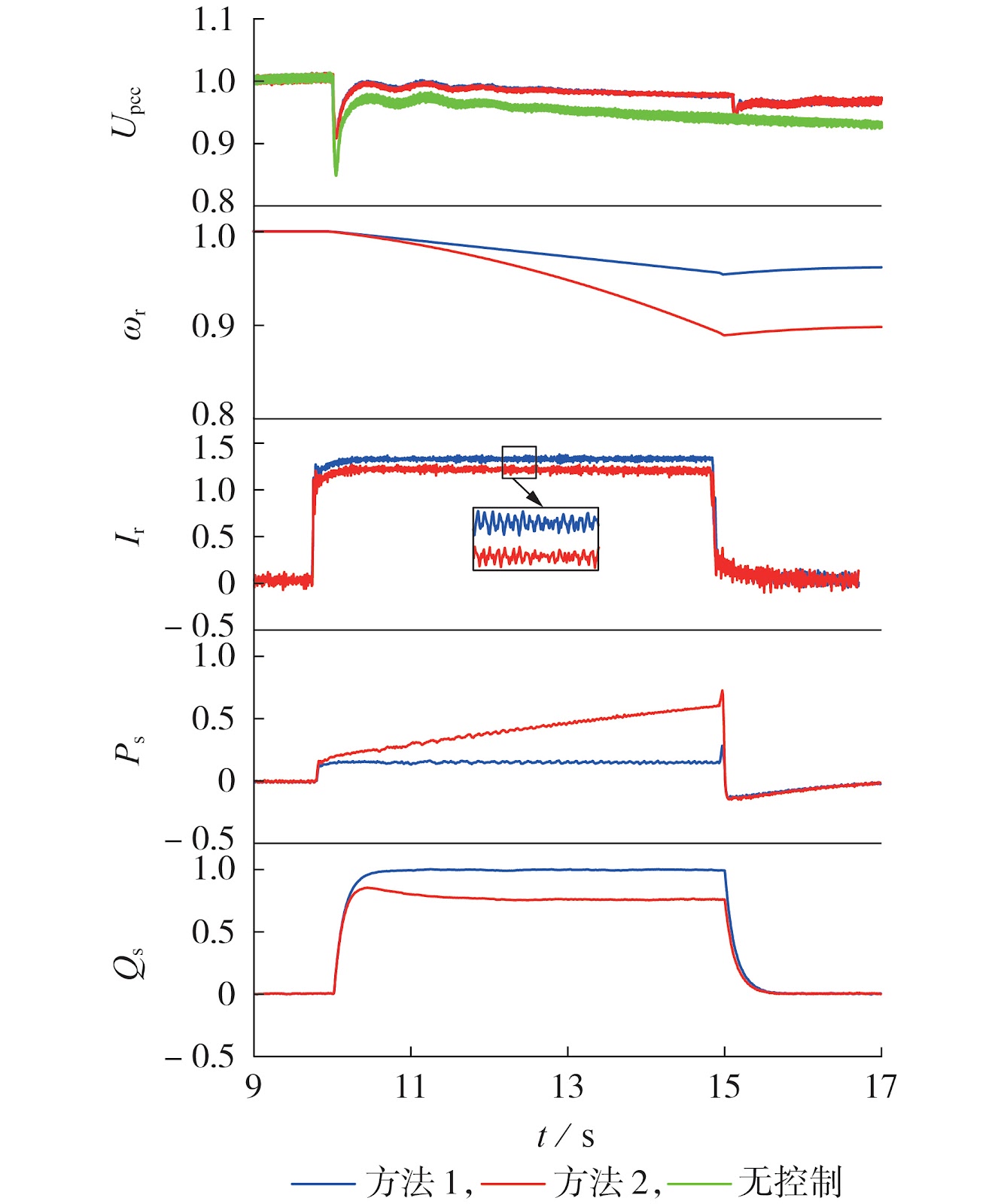
The high-inertia energy-storage synchronous condenser (SC-HI-ES) can provide reactive power support by adjusting excitation current and active power support by actively varying rotor speed. However, the absence of a prime mover makes its control capability difficult to quantify, preventing coordinated active and reactive power support for grid voltage. This paper analyzes the factors influencing SC-HI-ES power control capability, derives rotor current equations considering stator and rotor circuit constraints, and establishes the power controllable range (PCR) under rotor current constraints and speed variations. The relationship between the PCR and voltage support power demand is parsed, and a coordinated active-reactive power voltage support control method is proposed. Case studies validate the method's effectiveness. Results show that the proposed method enhances voltage support and avoids rotor current over-limit. Compared with methods ignoring speed variation or controlling only reactive power, the proposed method dynamically calculates PCR-based power demand under current speed, and through coordinated active and reactive power control, maximally satisfies the point of common coupling voltage target while ensuring rotor current does not exceed allowable values. This provides effective technical support for SC-HI-ES application in new-type power systems. Frequency control capability characterization and frequency-coordinated control are identified as future research directions.

Active and Reactive Power Coordinated Voltage Support Control Method for High-Inertia Energy-Storage Synchronous Condenser
Graphical Abstract
Original ResearchVol 46, Issue 8 • pp. 100-112DOI: 10.16081/j.epae.202605021Jan 15, 2026

Hardware-in-the-Loop Test Platform for Photovoltaic High-Frequency Controllers Based on UREP + FPGA

Authors: XU Tao, JIANG Chunhong, KUANG Weixing, HAO Zhenghang, CHEN Zhuo, XIONG Guojiang

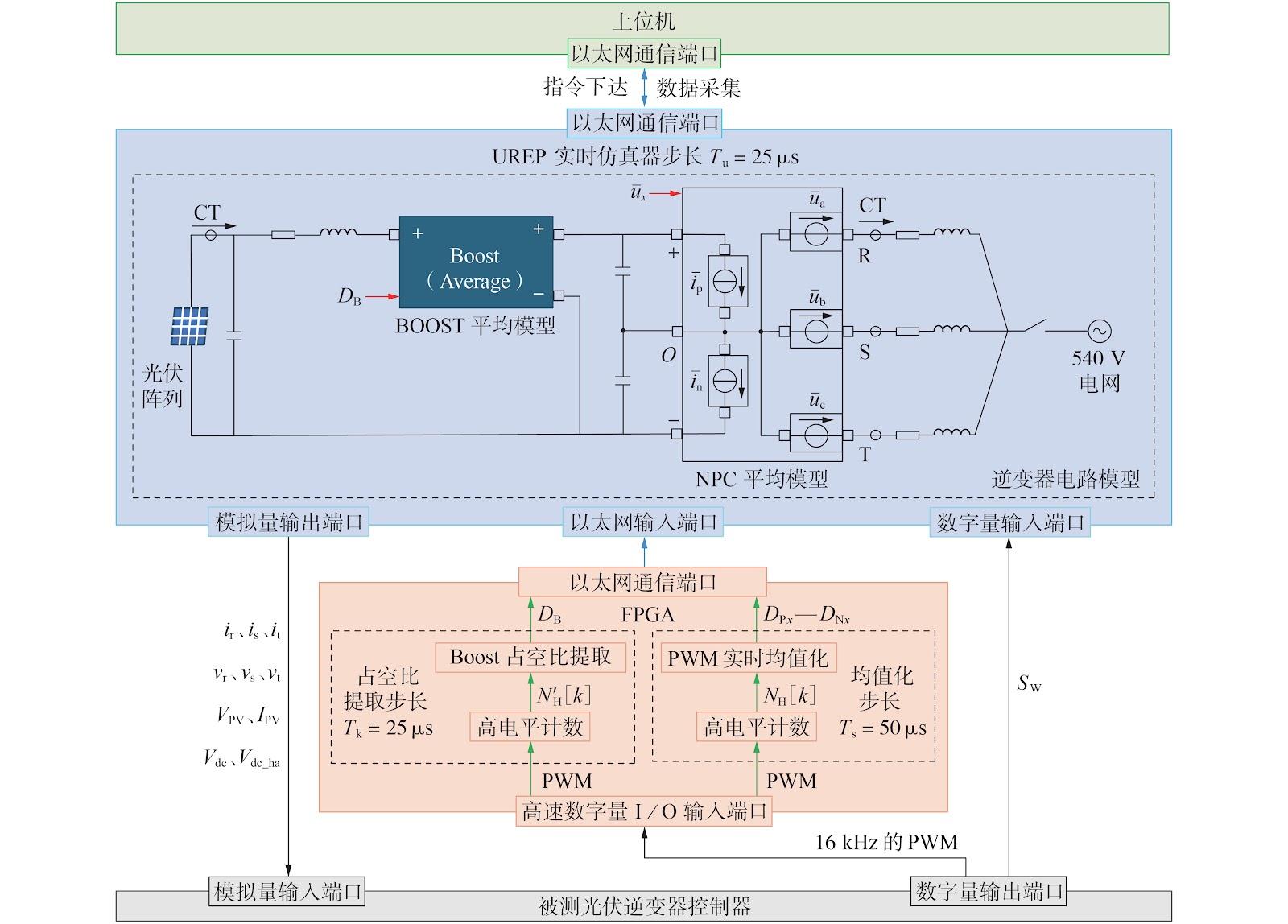
Real-time constraints prevent CPU-based electromagnetic transient simulators from accurately sampling high-frequency PWM signals at microsecond step sizes, leading to insufficient HIL test precision and even instability of the closed-loop system. This paper introduces a PWM averaging technique to construct a novel UREP (electromagnetic transient real-time simulator) + FPGA hardware-in-the-loop test platform. To achieve accurate PWM acquisition, the FPGA's nanosecond-level clock resolution increases the number of sampling points within a single switching period from a few points under microsecond simulation steps to several thousand points. The FPGA implements fixed-step PWM averaging, converting discrete switching states into continuous duty cycles that serve as control signals for the UREP-side inverter average model. This technique avoids frequent topology updates and state matrix reconstructions triggered by switching events, reduces high real-time computational resource consumption, improves numerical stability of the in-loop system, and enhances HIL test accuracy under large-step real-time constraints. Simulation cases and industrial-grade controller HIL tests verify the platform's feasibility and accuracy. The platform provides an efficient, reproducible verification scheme for photovoltaic controller control strategies and offers a feasible technical path for domestic electromagnetic transient real-time simulation platforms to conduct high-frequency controller HIL tests.

Hardware-in-the-Loop Test Platform for Photovoltaic High-Frequency Controllers Based on UREP + FPGA
Graphical Abstract
Original ResearchVol 46, Issue 8 • pp. 100-112DOI: 10.16081/j.epae.202603019Jan 15, 2026

Design and Implementation of a Distributed Simulation Architecture for Modern Power Systems Based on Data Distribution Service

Authors: CHEN Yuying, WEN Jianfeng, YAO Wei, JIANG Lin

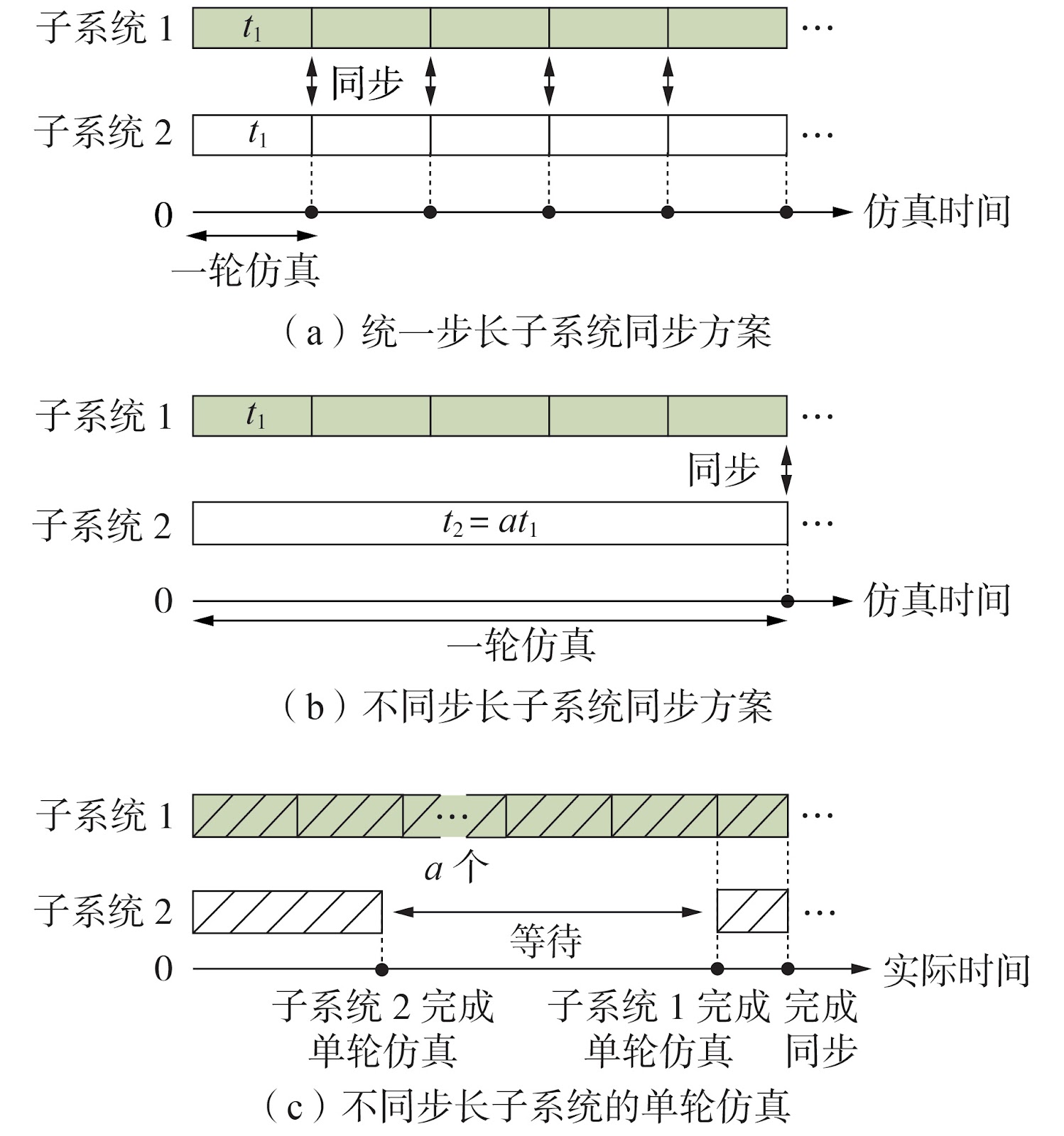
The integration of high-penetration renewable energy and power electronic converters has intensified the dynamic complexity of modern power systems, imposing stringent demands on simulation accuracy and computational efficiency. This paper proposes a distributed simulation architecture based on Data Distribution Service (DDS) that leverages dispersed computing resources to enhance scalability and efficiency while preserving numerical fidelity. The power system model is mathematically decoupled into multiple independently solvable basic subsystems, and a generic data transmission interface is designed using DDS. A time-consumption balancing scheme groups and distributes these subsystems across multiple devices, and a two-layer synchronization strategy enables efficient parallel simulation. The architecture is validated on a two-area four-machine system, the IEEE New England 10-machine 39-bus system, and the WECC 29-machine 179-bus system. Compared with centralized simulation, the average error on the two-area four-machine system remains below 1.05%. Simulation efficiency improvement reaches approximately 10% on the 10-machine 39-bus system and about 48% on the 29-machine 179-bus system. The results confirm high accuracy across different system scales and demonstrate that efficiency gains become more pronounced as system size increases, validating the architecture's scalability and compatibility. The proposed framework offers a promising pathway for large-scale power system simulation and supports future integration with edge computing and cross-platform deployment.

Design and Implementation of a Distributed Simulation Architecture for Modern Power Systems Based on Data Distribution Service
Graphical Abstract
Original ResearchVol 46, Issue 8 • pp. 100-112DOI: 10.16081/j.epae.202607002Jan 15, 2026

Heterogeneous Weighted Graph Partitioning and Decoupling Optimization Strategy for Electromagnetic Transient Parallel Simulation of AC/DC Distribution Networks

Authors: LUO Zhenyang, XU Jin, ZHAN Haisong, WU Pan, WANG Keyou

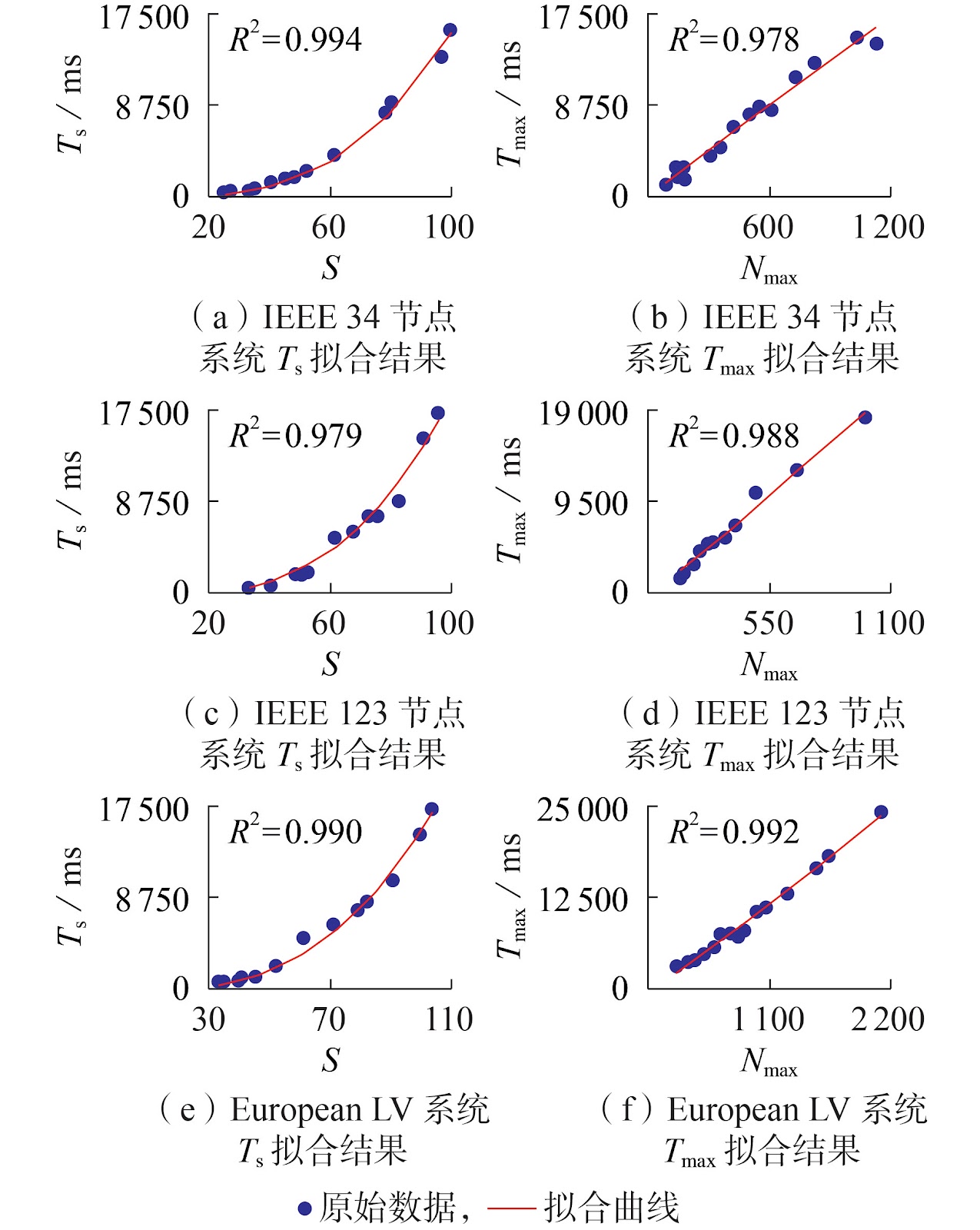
The increasing penetration of power electronic devices in AC/DC distribution networks imposes stringent computational demands on electromagnetic transient (EMT) parallel simulation. Conventional transmission-line delay decoupling methods are ill-suited to the strong electrical coupling characteristic of such networks. This paper proposes a non-delay decoupling parallel simulation acceleration framework based on heterogeneous weighted graph partitioning. An empirical computational cost evaluation model for each parallel decoupling stage is established, and a heterogeneous weighted graph model is constructed to precisely characterize the simulation computational complexity of AC/DC distribution network components, mapping matrix dimensions of device mathematical models to graph node weights. A multi-objective graph partitioning scheme is formulated that simultaneously balances partition computational overhead and minimizes the number of tie-line variables, complemented by an optimal partition number screening strategy. Simulation validation is conducted on three large-scale AC/DC distribution network composite test cases: IEEE 34-node, IEEE 123-node, and European Low Voltage (European LV) systems, all retrofitted with DC sections. Results demonstrate that the proposed empirical computational cost model achieves a simulation time fitting goodness-of-fit R² > 0.97, indicating high predictive accuracy. Under optimal partition configuration, the proposed method attains parallel speedup ratios of 12.11–15.77, significantly outperforming conventional natural partitioning schemes and effectively enhancing the EMT parallel simulation efficiency of AC/DC distribution networks.

Heterogeneous Weighted Graph Partitioning and Decoupling Optimization Strategy for Electromagnetic Transient Parallel Simulation of AC/DC Distribution Networks
Graphical Abstract
Original ResearchVol 46, Issue 8 • pp. 100-112DOI: 10.16081/j.epae.202606005Jan 15, 2026

Hierarchical Hybrid Non-Delay Decoupling Parallel Method for Electromagnetic Transient Simulation of DC-Collector Offshore Wind Farms

Authors: WANG Bofeng, XU Jin, WU Pan, QI Chen, MIAO Fenglin, WANG Keyou

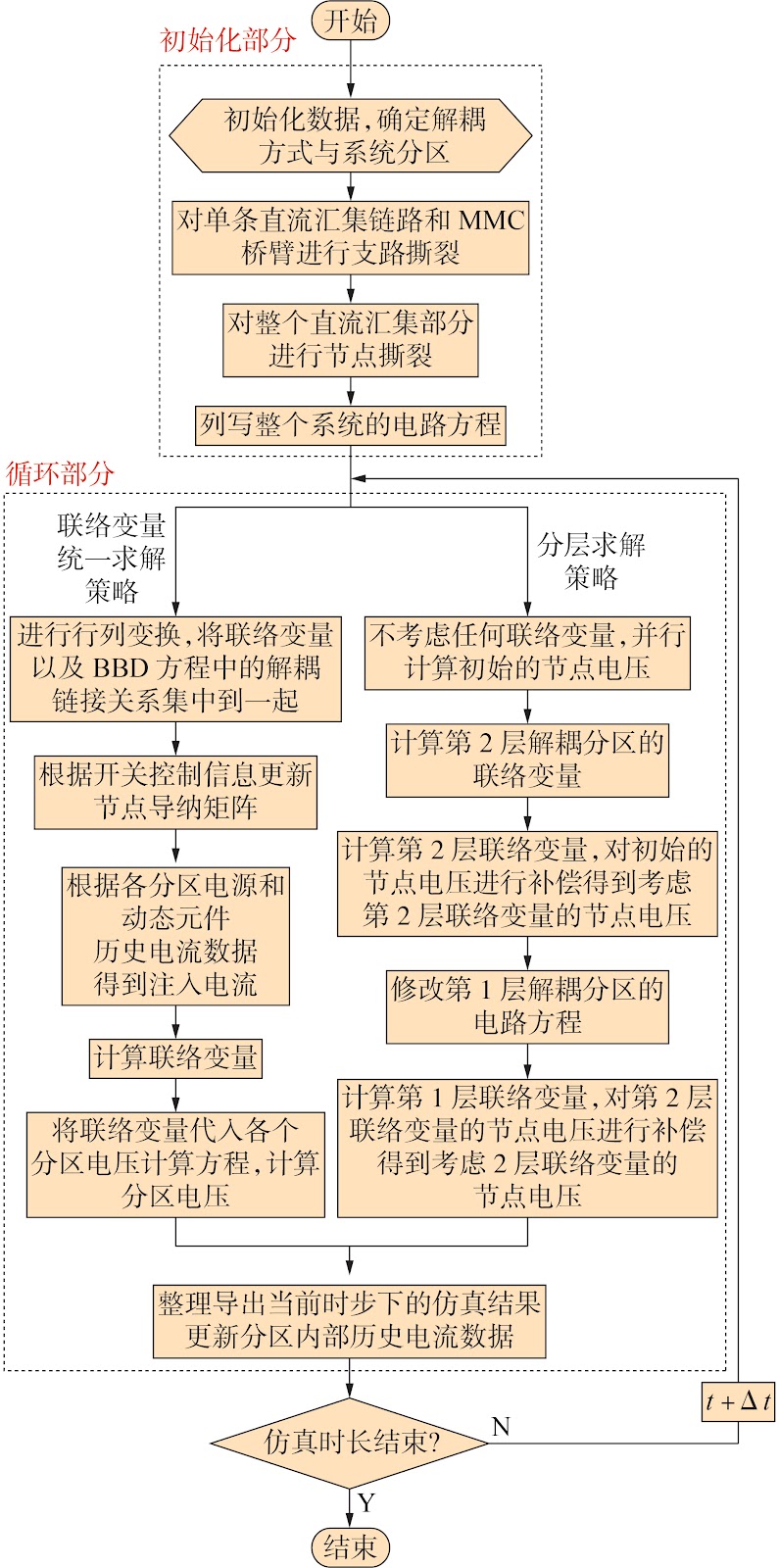
Real-time electromagnetic transient (EMT) simulation of DC-collector offshore wind farms is constrained by microsecond time steps, high model order from cascaded power electronic converters, and the inability of conventional decoupling methods to handle complex series-parallel topologies without introducing artificial delays. Existing non-delay decoupling methods, such as multi-area Thevenin equivalence (MATE) and compensation method, rely on branch tearing and are ill-suited for systems with numerous common-bus partitions, leading to excessive link variables and singular admittance matrices. This paper proposes a hierarchical hybrid non-delay decoupling parallel method that integrates MATE and its dual (node-tearing) approach through a layered architecture. The method constructs a mixed equivalent model tailored to DC-collector offshore wind farms, enabling flexible selection between unified and hierarchical solution modes for link variables based on operating conditions. A complete non-delay decoupling simulation workflow is established and validated on a DC series-parallel grid-connected offshore wind farm test case implemented in MATLAB. Results demonstrate that the proposed method reduces solution matrix dimensions and achieves significant speedup without compromising accuracy. For a 96-turbine wind farm, the hybrid decoupling model achieves an 11.99x speedup over the detailed model, compared to 8.77x for series-only decoupling and 6.22x for parallel-only decoupling. Mean absolute errors (MAE) for key variables remain below 0.1011, and root mean square errors (RMSE) below 0.6318, confirming high fidelity. The method enhances parallel simulation performance and offers a generalizable solution for real-time EMT simulation of large-scale offshore wind farms.

Hierarchical Hybrid Non-Delay Decoupling Parallel Method for Electromagnetic Transient Simulation of DC-Collector Offshore Wind Farms
Graphical Abstract
Original ResearchVol 46, Issue 8 • pp. 100-112DOI: 10.16081/j.epae.202606020Jan 15, 2026

Eigenvalue Computation Techniques for Small-Signal Stability Analysis of Large-Scale New-Type Power Systems: A Review and Outlook

Authors: WANG Yuhong, SU Miaohong, GAO Shilin, YE Hua, CHEN Ying

The escalating 'double-high' penetration of power electronics in new-type power systems has rendered conventional electromechanical transient small-signal stability analysis inadequate, necessitating electromagnetic transient (EMT) small-signal stability assessment. Eigenvalue analysis, grounded in rigorous theoretical foundations, is widely applied but faces two critical bottlenecks when scaled to large systems: the construction of EMT linearized state-space equations and the solution of high-order state-matrix eigenvalues. This review examines the urgent demand for EMT model eigenvalue analysis in large-scale new-type power systems. It systematically surveys research status and challenges across three domains: equilibrium-point modeling of EMT models, linearized state-space modeling, and efficient computation of critical eigenvalues. For equilibrium-point modeling, the paper evaluates Park transformation, double Park transformation, shifted frequency analysis (SFA), time-scale transformation, and Floquet-theory-based trajectory linearization. For linearized state-space modeling, it assesses component-level and network-level linearization strategies. For eigenvalue computation, it reviews partial eigenvalue algorithms, sparse matrix techniques, and model-order reduction methods. Key challenges include the inability of Park transformation to handle asymmetric or single-phase systems, the computational burden of Floquet transition matrix eigendecomposition, and the poor scalability of dense eigenvalue solvers for systems exceeding thousands of states. The paper concludes by identifying future research directions, including structure-preserving linearization, GPU-accelerated sparse eigenvalue algorithms, and data-driven model reduction, to enable practical EMT small-signal stability analysis for systems with 18.4 billion kW of installed renewable capacity by 2030.

Eigenvalue Computation Techniques for Small-Signal Stability Analysis of Large-Scale New-Type Power Systems: A Review and Outlook
Graphical Abstract
Original ResearchVol 46, Issue 8 • pp. 100-112DOI: 10.16081/j.epae.202605012Jan 15, 2026

Real-Time Simulation Modeling Method for Power Electronic Converters Based on Network Tearing

Authors: WANG Shinan, GUO Xizheng, WANG Zihao, YIN Yongjie, YUAN Bo

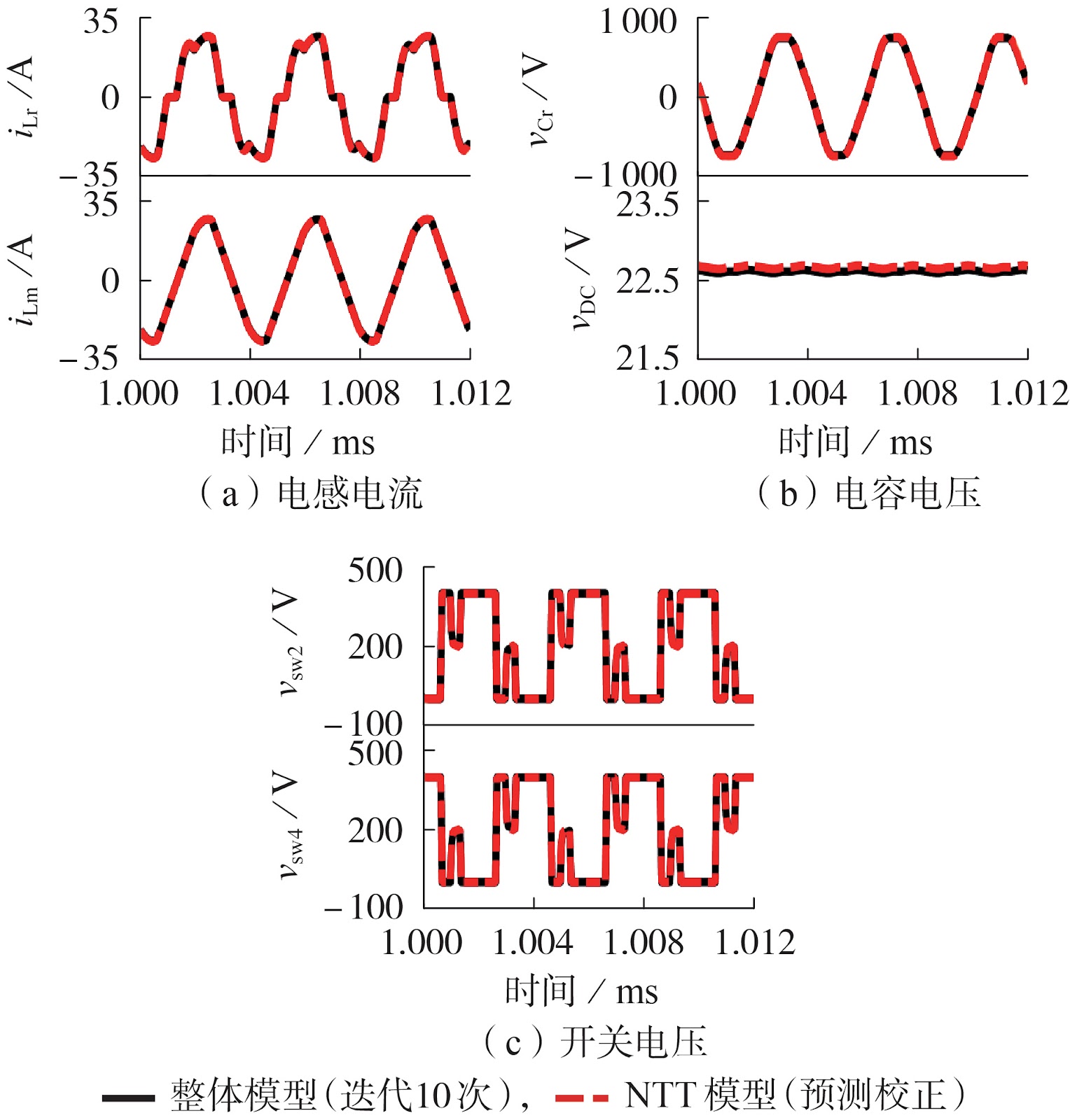
Complex converter topologies operating at elevated switching frequencies impose severe hardware resource and simulation-step constraints on FPGA-based hardware-in-the-loop (HIL) real-time simulation. Conventional binary-resistor modeling requires storing a distinct nodal admittance matrix for every switch state and resolving the algebraic loop between switch voltage and switch state through iterative computation, which inflates memory consumption and renders the achievable time step unpredictable. This work proposes a network tearing technique (NTT) that decomposes the high-order nodal voltage equations of the converter into multiple low-order subsystems linked only through equivalent circuits at tearing points, permitting independent modeling of each subsystem and a substantial reduction in stored matrix coefficients. The switch-state decision process is simplified and reformulated as a predictor-corrector scheme that replaces iterative solving, eliminating zero-crossing oscillation while shortening the critical solution path. An LLC resonant converter was modeled offline and validated against MATLAB/Simulink with a computational error not exceeding 0.1%. The FPGA implementation, using lookup-table coefficient updates with dimensioned hardware logic and variable bit widths, achieves a 70 ns simulation step. Real-time waveforms deviate from the hardware experimental platform by no more than 5%, and hardware memory consumption is reduced by 50% relative to the monolithic iterative model.

Real-Time Simulation Modeling Method for Power Electronic Converters Based on Network Tearing
Graphical Abstract
Original ResearchVol 46, Issue 8 • pp. 100-112DOI: 10.16081/j.epae.202606011Jan 15, 2026

GPU-Based Parallel Acceleration Method for Electromagnetic Transient Simulation of Large-Scale Renewable Energy Power Grids

Authors: YU Zhitong, YANG Minghao, SONG Yankan, HUANG Shaowei, CHEN Ying, SHEN Chen

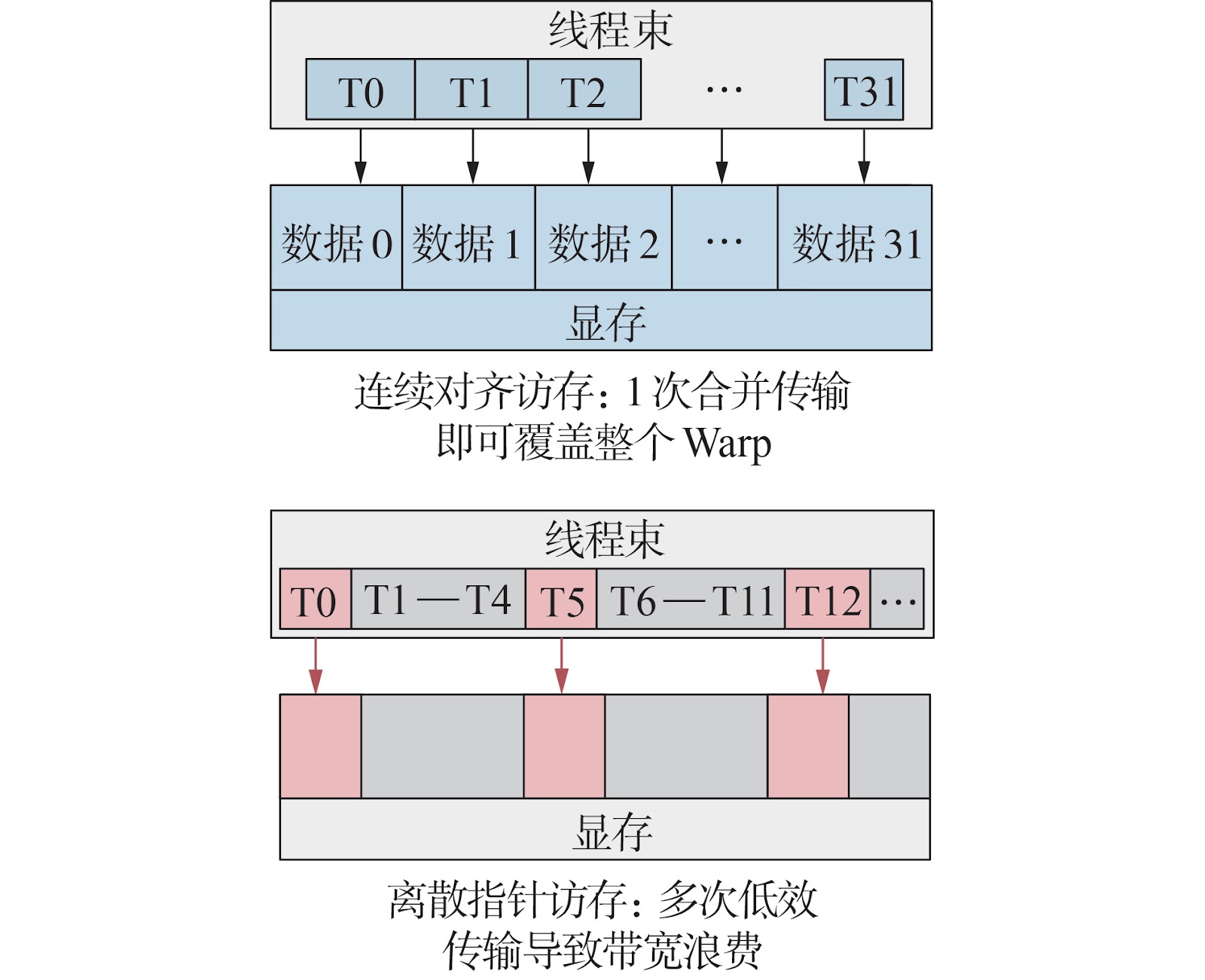
The integration of high-penetration renewable energy sources imposes severe computational bottlenecks on electromagnetic transient (EMT) simulation of large-scale power grids containing thousands of power electronic devices. Graphics processing units (GPUs) offer high-throughput parallelism, but direct application is hindered by three obstacles: thread warp divergence caused by heterogeneous control topologies, non-coalesced memory access from graph-based computation, and instruction redundancy from dynamic parsing. This paper proposes a heterogeneous parallel acceleration method for large-scale renewable energy grids. By introducing graph isomorphism, a two-stage graph clustering algorithm identifies and aggregates control systems at the topological level, eliminating instruction flow divergence from heterogeneous controllers. A GPU-oriented automatic code generation framework transforms aggregated models into branchless, memory-coalesced computational kernels. Experimental results on a scenario with thousands of renewable devices demonstrate a nearly 3x speedup over conventional simulation methods, with excellent scalability. Specifically, compressing effective execution sequence variants from 20 to 1 reduces DRAM-related access cycles from 18,595 to 1,502 and raises L2 cache hit rate from 16.09% to 84.54%. Static specialization eliminates dynamic graph parsing logic, reducing instruction count per control step by 91.8% and achieving a 2.7x kernel-level speedup. The method provides a high-fidelity, highly versatile, and high-performance EMT simulation solution for large-scale renewable energy systems.

GPU-Based Parallel Acceleration Method for Electromagnetic Transient Simulation of Large-Scale Renewable Energy Power Grids
Graphical Abstract
Original ResearchVol 46, Issue 8 • pp. 100-112DOI: 10.16081/j.epae.202605005Jan 15, 2026

Temporal Regulation Domain for New-Type Power Systems: Concept and Methodology

Authors: REN Ji, REN Zhouyang, FENG Jianbing, LUO Yufan, ZHAO Ruifeng, GUO Wenxin, CHEN Zhiwei

The rapid proliferation of inverter-based renewables in new-type power systems has exposed the inadequacy of conventional point-based regulation capability assessments, which evaluate a single operating point and fail to capture the temporally coupled feasible space required for scheduling and resource allocation. This paper introduces the temporal regulation domain (TRD) as a global construct that maps all feasible system states satisfying intertemporal constraints into an observation space. A compact TRD model is formulated incorporating ramping, state-of-charge, power balance, security, and regulation cost budget constraints. Topological analysis establishes that the TRD is bounded, closed, and monotonically non-decreasing with respect to the cost budget. To overcome the curse of dimensionality in boundary characterization, a prior-constraint-guided deep neural network is developed, embedding monotonicity priors into the loss function. Simulations on a modified IEEE 118-bus system demonstrate that the proposed method efficiently and accurately delineates high-dimensional TRD boundaries. The TRD expands in a stepwise manner with regulation cost investment, exhibiting diminishing marginal returns; identifying the stepwise growth point provides a reliable reference for cost optimization. As renewable penetration increases, the TRD follows a steep-rise, plateau, and sharp-drop pattern, enabling identification of critical penetration thresholds to guide renewable deployment without violating security boundaries.

Original ResearchVol 46, Issue 8 • pp. 100-112DOI: 10.16081/j.epae.202606022Jan 15, 2026

A Blocking-State Prediction Method for MMC Oriented to Large-Step Electromagnetic Transient Real-Time Simulation

Authors: ZHOU Xin, PENG Hongying, MU Qing, HU Shanhua, LI Yalou, ZHOU Xiaoxin

Real-time electromagnetic transient simulation of modular multilevel converters (MMCs) on multi-core CPU platforms at large time steps is constrained by the difficulty of predicting diode conduction states during blocking operation. Conventional direct prediction methods sample node voltages at the previous time step and extrapolate the next switching state; at 50 μs, however, multiple natural commutation events can occur within a single step, producing over-shoot, numerical oscillation, and elevated prediction failure rates. This work proposes a blocking-state prediction method grounded in the internal topological and electrical constraints of submodules. Diodes exhibiting identical behavior under blocking are aggregated into a unified equivalent circuit, and a constraint-based state prediction mechanism with enhanced robustness is constructed, eliminating reliance on high-speed FPGA timestamping or variable-step rollback. Offline and real-time simulations on the ADPSS platform demonstrate that at a 50 μs step the proposed method maintains computational error within 3‰–7‰, substantially reduces prediction failure probability relative to direct prediction, and completes a single simulation step in approximately 22.23 μs on a multi-core CPU architecture, satisfying the 50 μs real-time constraint. The method provides a viable pathway for efficient CPU-based real-time simulation of large-scale MMC systems.

Original ResearchVol 46, Issue 8 • pp. 100-112DOI: 10.16081/j.epae.202606026Jan 15, 2026

A System Frequency Response Estimation Method Accounting for Fault-Location-Induced Differences in Frequency Regulation Capability

Authors: MA Yanyu, YUN Zhihao

Short-circuit faults in high-renewable-penetration power systems produce active power deficits and frequency regulation capability losses that vary markedly with fault location, degrading the accuracy of conventional system frequency response (SFR) models. This paper develops a refined SFR correction framework that maps fault location to low-voltage ride-through (LVRT) cluster composition via exact nodal voltage solution, thereby quantifying the initial active power deficit and the frequency regulation capability loss. A permanent magnet synchronous generator (PMSG) multi-state model is established covering steady-state operation, fault ride-through, and frequency regulation. Voltage sag depth and active power recovery rate differences among wind farms are aggregated to compute the system-level total wind power deficit, while a frequency regulation state-switching coefficient is introduced to weight-aggregate an equivalent system frequency regulation capability availability ratio. Validation on the IEEE 10-machine 39-bus system demonstrates that the proposed model reproduces frequency nadir and rate of change of frequency (RoCoF) with errors of 0.016–0.027% and 0.21–0.41%, respectively, against detailed time-domain simulation. Single-fault-scenario computation requires 0.0873 s versus 0.3574 s for the unified structure model and 14.7240 s for detailed time-domain simulation. Batch scanning of 10 fault locations totals 0.892 s, yielding a 173-fold reduction relative to detailed time-domain simulation (154.326 s), enabling offline enumeration and online real-time matching for emergency control strategy deployment.

Original ResearchVol 46, Issue 8 • pp. 100-112DOI: 10.16081/j.epae.202606023Jan 15, 2026

Data-Driven Regression-Based Transient Equivalent Modeling of Transmission Networks with High Renewable Energy Penetration

Authors: LIU Xiangshang, WANG Huifang, LIU Dongran, DAI Shiqiang, MA Wei

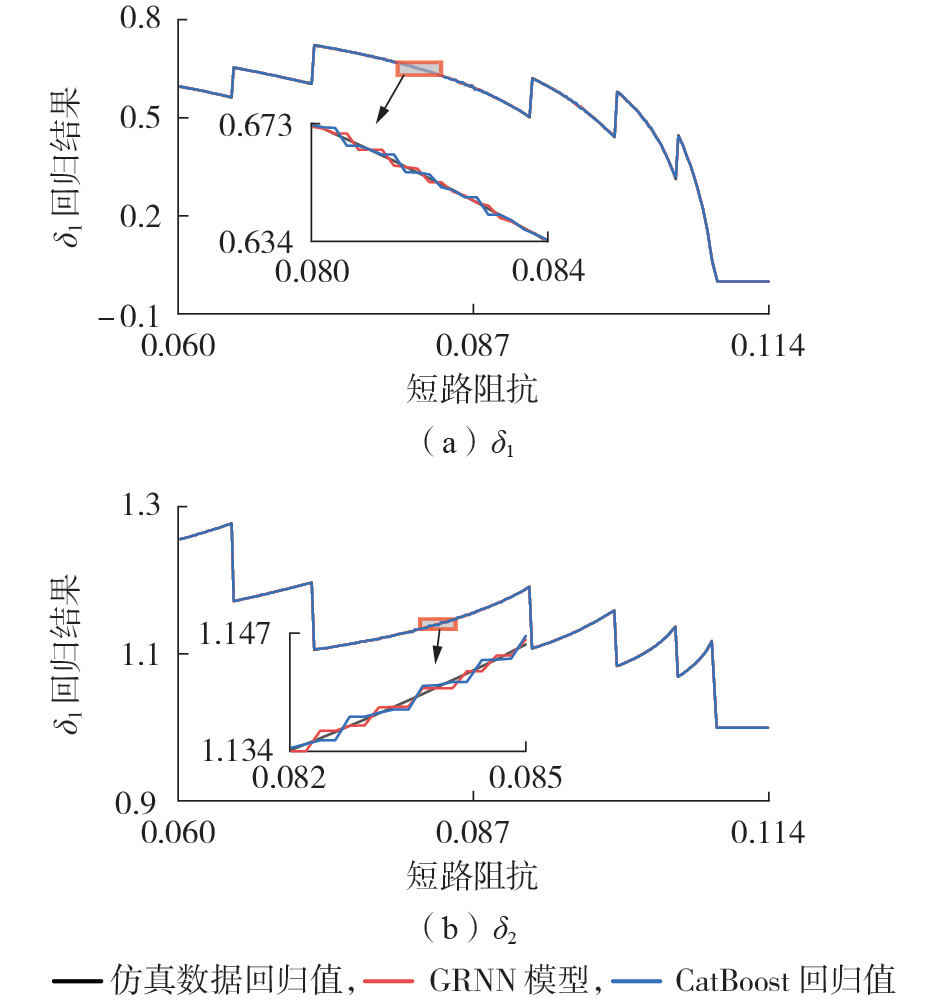
Conventional Thévenin equivalent models fail to capture the nonlinear low-voltage ride-through (LVRT) and current-limiting behavior of inverter-interfaced renewable generators, leading to significant errors in short-circuit current calculations near transmission-distribution boundaries. This paper proposes a transient equivalent model and parameter estimation method for transmission networks with high renewable penetration under specific operating conditions. The model augments the traditional ideal voltage source and equivalent impedance with a voltage-controlled current source (VCCS) and an additional short-circuit impedance. The VCCS control function aggregates all renewable generators, distinguishing between units that enter LVRT and those that do not. A data-driven regression approach estimates equivalent parameters using the additional short-circuit impedance as input. Validation on a modified IEEE 39-bus system with high renewable penetration confirms the model's rationality and the accuracy of the parameter estimation. The proposed model achieves superior short-circuit current calculation accuracy compared to the conventional Thévenin model, particularly for faults near the transmission-distribution interface where renewable generators experience voltage dips below 0.9 p.u. and exhibit non-smooth current response characteristics.

Data-Driven Regression-Based Transient Equivalent Modeling of Transmission Networks with High Renewable Energy Penetration
Graphical Abstract
Original ResearchVol 46, Issue 8 • pp. 100-112DOI: 10.16081/j.epae.202606009Jan 15, 2026

Research Progress and Challenges in Phasor-Based Time-Domain Simulation Solution Algorithms for New-Type Power Systems

Authors: HUANG Litao, XIAO Xianghui, ZHANG Junbo, SUN Daorang, LIN Ziming, DENG Jianyong, LIU Yang

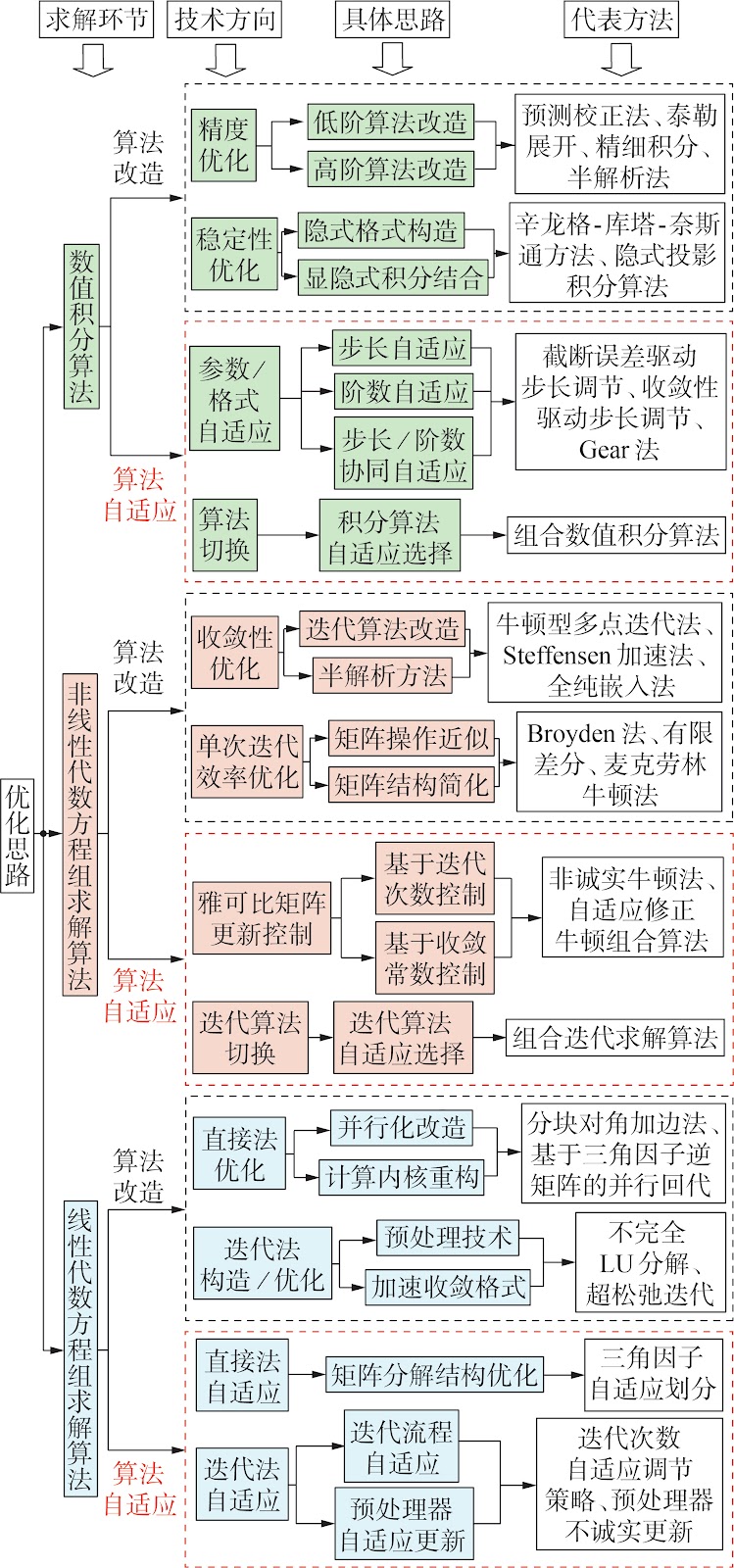
The large-scale integration of renewable energy sources has imposed strong nonlinearities and multi-timescale coupling on modern power systems, rendering conventional time-domain simulation solution algorithms inadequate for offline transient analysis of large-scale new-type power systems with high proportions of power electronic devices. This review systematically addresses the performance optimization problem of time-domain simulation algorithms. First, new requirements are identified across three solution stages: numerical integration, nonlinear algebraic equation solution, and linear algebraic equation solution. Second, existing research progress is consolidated under two core optimization paradigms—algorithm modification and algorithm adaptation—with their respective advantages and challenges analyzed. Algorithm modification pursues mathematical format innovation to expand absolute performance boundaries, while algorithm adaptation achieves optimal resource allocation within given boundaries through real-time scheduling and combination. The review concludes that the core challenge lies in coordinating multi-dimensional performance conflicts and responding to time-varying simulation demands. Persistent deficiencies include: in algorithm modification, multi-dimensional performance conflicts hinder reform efforts, diminish performance gains, and fixed algorithmic structures cannot respond to time-varying requirements; in algorithm adaptation, adjustment objectives and state-sensing dimensions remain singular, with parameters and switching logic heavily reliant on manual experience, severely constraining robustness. Future directions advocate integrating both paradigms to expand performance adjustment ranges and enhance responsiveness to time-varying demands, while exploring artificial intelligence fusion with traditional numerical methods to replace empirical parameter design and achieve precise algorithm regulation.

Research Progress and Challenges in Phasor-Based Time-Domain Simulation Solution Algorithms for New-Type Power Systems
Graphical Abstract
Original ResearchVol 46, Issue 8 • pp. 100-112DOI: 10.16081/j.epae.20251130012Jan 15, 2026

Two-Stage Parameter Identification Method for Electromagnetic Transient Simulation Models of Grid-Connected Photovoltaic Systems

Authors: ZENG Qi, DAI Huaqing, GAO Shilin, ZHENG Zongsheng, WANG Yuhong, LIU Ziqi

Parameter identification for electromagnetic transient (EMT) models of grid-connected photovoltaic (PV) systems suffers from weak identifiability of controller parameters when environmental, electrical, and controller parameters are optimized simultaneously. This paper proposes a two-stage identification framework that partitions parameters by physical meaning into an environmental/electrical set and a controller set. For the environmental/electrical set, a Sobol global sensitivity analysis based on variance decomposition screens key parameters. For the controller set, a dynamic response feature clustering method combined with an unsupervised screening strategy using an inter-cluster mean difference index reduces the parameter space. Differentiated fitness functions are constructed for each stage, and an improved quantum dung beetle optimization (IQDBO) algorithm incorporating quantum angle encoding and a stagnation perturbation mechanism performs the identification sequentially. Case studies demonstrate that the proposed method compresses the search space and improves controller parameter identifiability. Compared with particle swarm optimization (PSO) and grey wolf optimizer (GWO), the IQDBO-based method achieves superior identification accuracy and convergence stability. Environmental and electrical parameter identification errors remain below 1%, while controller parameter errors remain below 3%. The framework addresses the weak identifiability bottleneck in unified optimization and provides a practical pathway for EMT model calibration in PV grid-connected systems. Future work will extend the method to multiple operating conditions and noisy field data, and develop accelerated computation strategies.

Two-Stage Parameter Identification Method for Electromagnetic Transient Simulation Models of Grid-Connected Photovoltaic Systems
Graphical Abstract
Original ResearchVol 46, Issue 8 • pp. 100-112DOI: 10.16081/j.epae.202606012Jan 15, 2026

Multi-Timescale Reduced-Order Modeling of Direct-Drive Wind Turbines for On-Demand Simulation Across Diverse Grid-Integration Scenarios

Authors: LI Hang, HE Lili, TAO Yiwei, CAI Haiqing, CHEN Wei, SHUAI Zhikang

Full-order models of direct-drive wind turbines capture microsecond switching transients through second-scale control dynamics but impose prohibitive computational burdens for large-scale or long-duration grid-integration studies. Existing reduced-order approaches—controlled current source equivalents, empirical timescale truncation, linearization with balanced truncation, singular perturbation decomposition, local model switching, and data-driven surrogates—lack a systematic framework for matching model complexity to the dominant response of a specific analysis task. This paper proposes an on-demand simulation framework that partitions turbine dynamics into six hierarchical timescales: switching, AC current, mid-frequency, DC voltage, rotor speed, and operational. Each level is mapped to its dominant physical components, critical state variables, and typical grid-study scenarios, establishing explicit correspondences between analysis objectives and required model fidelity. A reduction methodology combining timescale-dominant response identification with trajectory sensitivity analysis is developed to selectively retain fast dynamics within the target timescale while enforcing steady-state consistency constraints on slower variables. Case studies at the AC current and rotor speed timescales demonstrate that the reduced models reproduce fast current and voltage transients with approximately 5–6× simulation speedup while preserving steady-state accuracy, and accurately capture power transient evolution governed by rotor inertia and slow-variable regulation. The framework provides a structured pathway for constructing hierarchical, precision-controllable turbine models for large-scale wind farm simulation and multi-scenario grid-integration analysis.

Multi-Timescale Reduced-Order Modeling of Direct-Drive Wind Turbines for On-Demand Simulation Across Diverse Grid-Integration Scenarios
Graphical Abstract
Original ResearchVol 46, Issue 8 • pp. 100-112DOI: 10.16081/j.epae.202606025Jan 15, 2026

Open-Source Electromagnetic Transient White-Box Model of Converters for Renewable Energy Grid-Connected System Analysis

Authors: LAI Qiping, LI Tao, WANG Jili, SHEN Yi, LI Shuman, CAO Yuqi, SHEN Chen, LÜ Jinli

The large-scale integration of power electronic converters in high-proportion renewable energy systems imposes stringent requirements on the accuracy and extensibility of grid-following (GFL) and grid-forming (GFM) converter models. This paper derives a theoretical model of GFL/GFM grid-connected converters that accounts for complete circuit and control dynamics, and constructs an open-source white-box converter model on the CloudPSS electromagnetic transient (EMT) simulation platform. The model adopts per-unit and structural design for electrical topology, control loops, and multiplier equivalence, enabling simulation of converters with various voltage levels and rated capacities. Theoretical calculations and simulation results demonstrate that the model exhibits accurate disturbance response, flexible parameter configuration, strong extensibility, and high simulation efficiency. The model provides a foundation for constructing a standardized EMT model library for renewable energy converters. The full-order small-signal state-space equations are provided, and the conversion between per-unit time and named time is derived. Case studies validate small/large disturbance responses, parameter sensitivity (short-circuit ratio, reactance-resistance ratio, PI parameters), and simulation efficiency in a hybrid AC/DC grid standard test system. The model and test cases are publicly available on the CloudPSS official website.

Open-Source Electromagnetic Transient White-Box Model of Converters for Renewable Energy Grid-Connected System Analysis
Graphical Abstract
Original ResearchVol 46, Issue 8 • pp. 100-112DOI: 10.16081/j.epae.202606001Jan 15, 2026

Review of Hybrid Characteristic Modeling for Renewable Energy Power Generation Systems

Authors: PAN Xueping, WEI Yongkai, LIANG Wei, HAN Jun, GUO Jinpeng, SUN Xiaorong, JU Ping

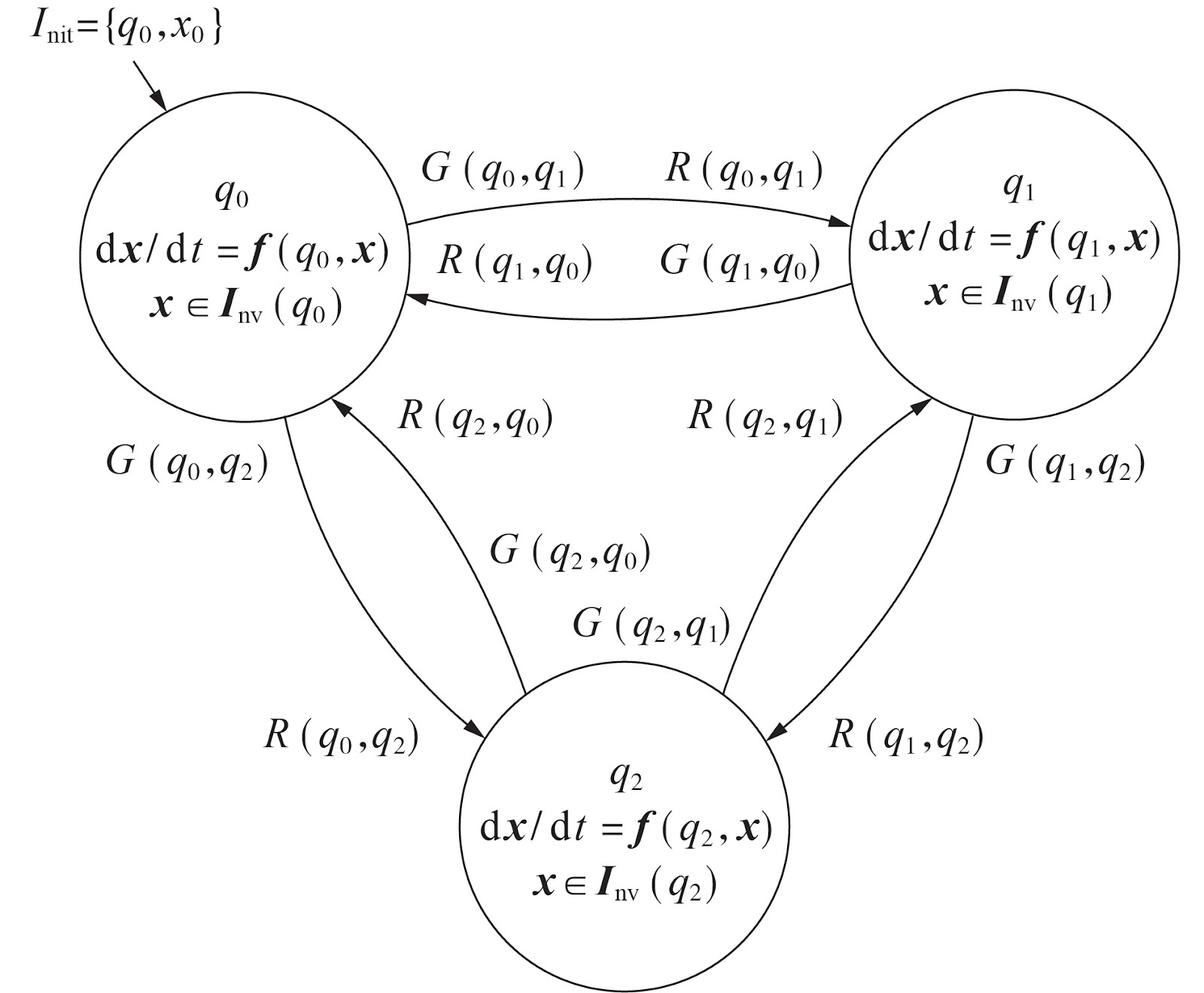
The increasing penetration of renewable energy sources has introduced novel instability phenomena in power grids, such as sustained and repeated low-voltage ride-through events, which existing models fail to analyze or explain. This paper addresses the typical continuous-discrete hybrid characteristics of renewable energy generation systems at both the unit and station levels. It discusses the interwoven discrete multi-mode switching and continuous state evolution during faults, emphasizing the necessity of hybrid models. Four classes of hybrid models are compared, including hybrid automata, hybrid Petri nets, switching models, and piecewise affine models, with their applicable scenarios. For switching models and piecewise affine models, parameter identification methods are proposed, and their applicable scenarios are discussed. To tackle the challenge of aggregating dispersed renewable units with diverse discrete event states, a mechanism-data fusion hybrid model aggregation method is proposed. Future research directions for hybrid characteristic modeling of renewable energy generation systems are outlined. The review highlights that current hybrid models remain in an early stage, and mechanism-data fusion modeling is a promising supplement. Key challenges include balancing model complexity and accuracy, and addressing the contradiction between diverse transient behaviors and model universality.

Review of Hybrid Characteristic Modeling for Renewable Energy Power Generation Systems
Graphical Abstract
Original ResearchVol 46, Issue 8 • pp. 100-112DOI: 10.16081/j.epae.202606015Jan 15, 2026

Controller Structure Identification Method for Doubly-Fed Wind Turbine Generators Based on Mapping Between FRT Response and Control Loops

Authors: CUI Haohan, CHAO Pupu, LI Weixing

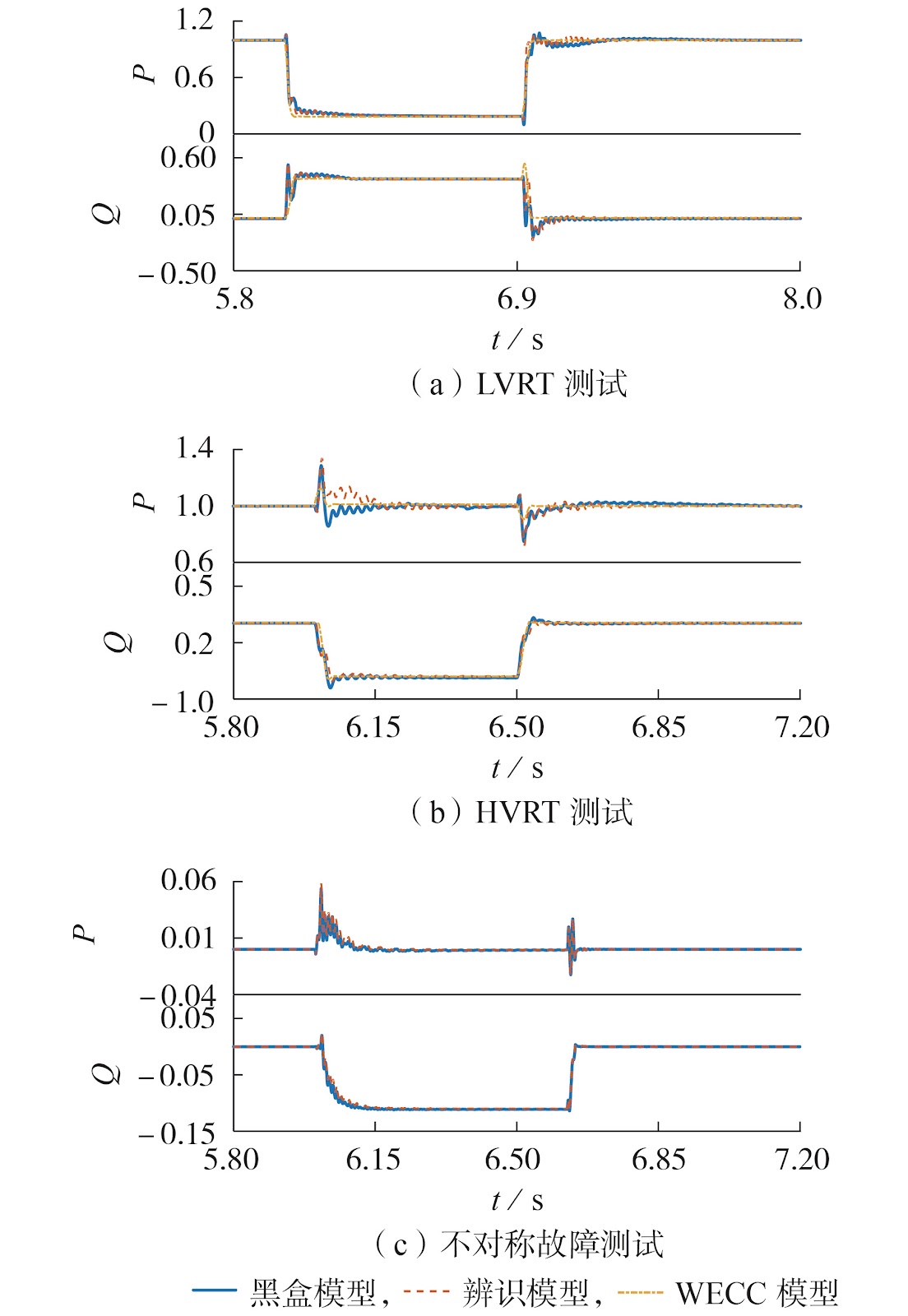
Accurate electromagnetic transient (EMT) models of doubly-fed induction generator (DFIG) wind turbines are essential for grid stability analysis under large disturbances, yet encapsulated commercial controllers prevent structural access. This paper proposes a controller structure identification method based on the mapping between fault ride-through (FRT) response morphology and control loop actions. Using measured FRT responses from nine mainstream DFIG types under symmetrical and asymmetrical faults—with voltage sags to 0.9, 0.75, 0.5, 0.35, and 0.2 p.u. and swells to 1.2, 1.25, and 1.3 p.u., and durations of 2000, 1705, 1214, 920, 625, 2000, 1000, and 500 ms—typical response features are categorized. Mapping relationships between each FRT stage and control loop actions are established, and identification criteria for active power, reactive power, and FRT control loops are constructed via excitation signal and operating condition combinations. A white-box EMT model is built from the identification results and validated on a hardware-in-the-loop platform against manufacturer black-box models and actual controllers. Results show the proposed method achieves high modeling accuracy across different DFIG types and operating conditions, outperforming the WECC generic model, particularly in reproducing full-process FRT responses including active/reactive power spikes, oscillations, and recovery behaviors.

Controller Structure Identification Method for Doubly-Fed Wind Turbine Generators Based on Mapping Between FRT Response and Control Loops
Graphical Abstract
Original ResearchVol 46, Issue 8 • pp. 100-112DOI: 10.16081/j.epae.202607004Jan 15, 2026

Spatiotemporal Thermodynamic Dynamic Load Modeling and Characteristic Analysis of Data Centers for Power System Applications

Authors: ZHOU Niancheng, XU Ying, CHI Yuan, XU Luona, ZHOU Yiyao, LUO Yongjie

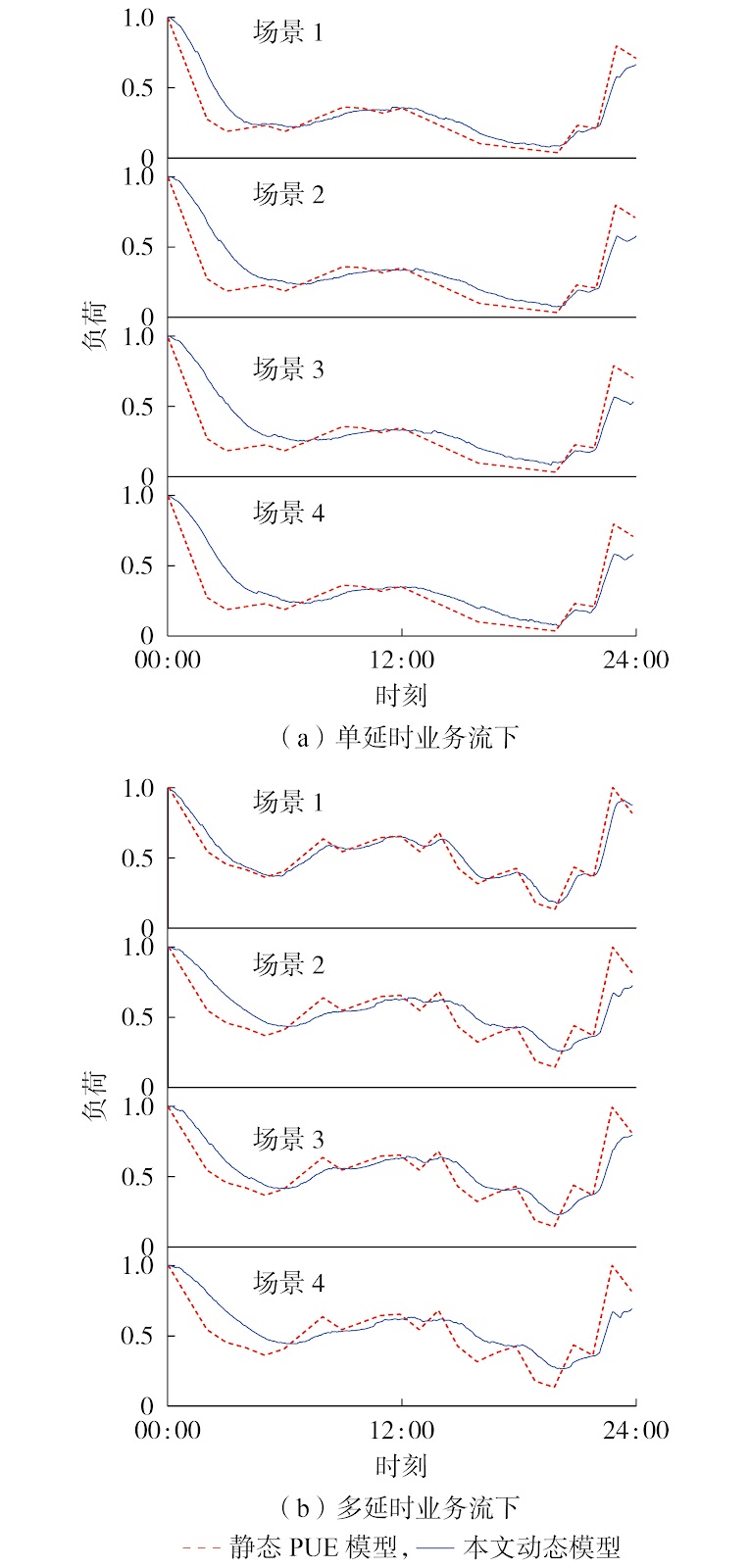
Data center expansion has driven a surge in energy consumption, and prediction deviations for high-density loads introduce risks to power grid planning and operation. Existing models exhibit significant limitations: they neglect temperature non-uniformity and the nonlinear impact of rack layout on airflow; rely on static power usage effectiveness (PUE) without accounting for the coupling between load fluctuations and cooling dynamic response; and linearize cooling systems, ignoring IT equipment–cooling system–thermal environment interactions. This paper proposes a spatiotemporal thermodynamic dynamic load model for data centers based on computational fluid dynamics (CFD). Spatially, a physical model incorporating cold aisle containment, server power, and layout is constructed; CFD simulations capture temperature non-uniformity and establish a collaborative IT power–temperature field–cooling power model. Temporally, IT load time-series fluctuations, thermal inertia response, and cooling power dynamics are coupled to quantify the impact of physical parameters on overall load at short time scales. Simulation results for a typical day show that traditional models, by neglecting these key parameters, may cause instantaneous load discrepancies of 12.56%–34.21%. Data center load characteristics are strongly coupled with internal thermal environment dynamics, and the proposed model provides a high-fidelity thermodynamic reference for data centers participating in grid interaction as flexible resources.

Spatiotemporal Thermodynamic Dynamic Load Modeling and Characteristic Analysis of Data Centers for Power System Applications
Graphical Abstract
Original ResearchVol 46, Issue 8 • pp. 100-112DOI: 10.16081/j.epae.202605011Jan 15, 2026

Constant-Parameter VBR Modeling and Analysis of Synchronous Generators Considering Magnetic Saturation Characteristics

Authors: LI Yingnan, WANG Yule, PENG Li, MU Qing, GUO Xizheng, DENG Jun

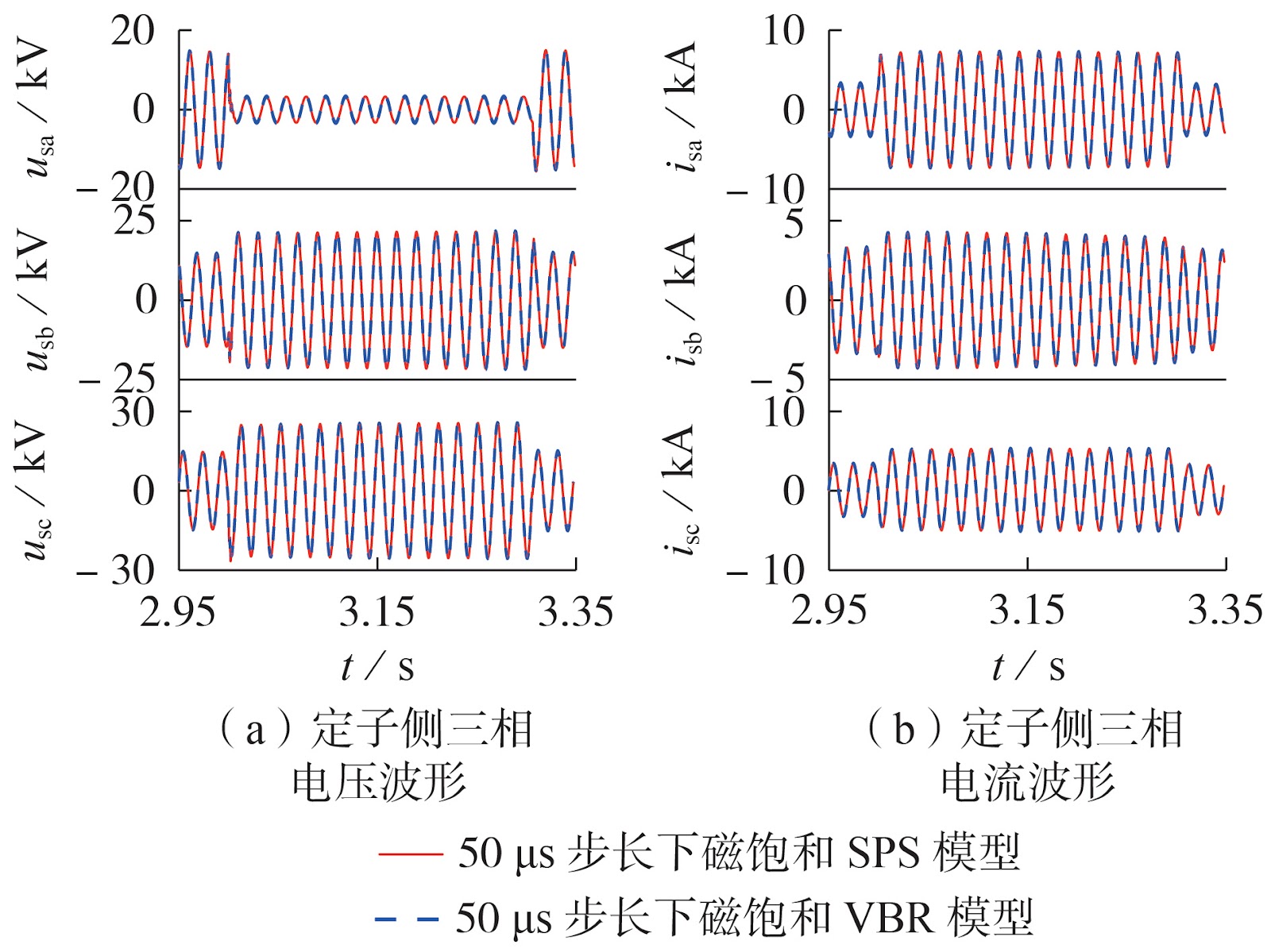
Traditional electromagnetic transient simulation of synchronous generators suffers from insufficient numerical stability, low computational efficiency, and inadequate representation of magnetic saturation. To improve the reliability of power grid security and stability analysis, this paper proposes an improved modeling scheme based on the voltage-behind-reactance (VBR) method, focusing on the performance deficiencies of conventional current-source equivalent models. The scheme constructs a decoupled machine-network interface circuit with constant resistance-inductance branches via constant-parameterization, employs piecewise linearization of the flux-current characteristic curve to accurately represent magnetic saturation, and adopts a hybrid explicit-implicit Euler discretization to avoid algebraic loops. Validation on a single-machine infinite-bus benchmark and fault condition tests on the IEEE 14-bus system using MATLAB/Simulink demonstrate that the proposed model significantly enhances computational efficiency and numerical stability for large-step simulations while maintaining excellent accuracy in fault transient scenarios. Compared with the MATLAB/Simulink SPS model, the proposed model achieves a 55.6% improvement in computational efficiency under equal simulation accuracy, with two-norm voltage errors of 0.33% and 0.3% at nodes 5 and 9, and current errors of 0.51% and 0.41%, respectively. The model is suitable for large-scale electromagnetic transient simulation analysis of power systems.

Constant-Parameter VBR Modeling and Analysis of Synchronous Generators Considering Magnetic Saturation Characteristics
Graphical Abstract
Original ResearchVol 46, Issue 8 • pp. 100-112DOI: 10.16081/j.epae.202606002Jan 15, 2026

Electromagnetic Transient Modeling, Simulation, and Characteristic Analysis of a High-Head Hydropower Unit Islanded via Flexible DC Transmission System

Authors: WANG Yuhong, HE Haomin, GAO Shilin, CHEN Wensheng

This study addresses the electromagnetic transient (EMT) modeling and operational stability of high-head hydropower units connected to a modular multilevel converter-based high-voltage direct current (MMC-HVDC) islanded transmission system, a configuration critical for developing hydropower resources in Tibet. A refined model of the high-head unit incorporating dynamic penstock characteristics and a detailed MMC-HVDC system model are established. An initialization method tailored for hydro-DFACTS EMT simulation is proposed, and a complete model is implemented on the CloudPSS platform. Simulation results demonstrate that the dynamic characteristics of high-head units degrade short-term stability compared to conventional units. A pronounced hydraulic-electrical coupling between the unit and the MMC-HVDC system can induce ultra-low-frequency oscillations in the sending-end system. Furthermore, the system exhibits elevated subsynchronous oscillation risk in the [30, 50] Hz band, with phase differences exceeding 180°. The study concludes that high-head characteristics are a key factor influencing small-signal stability, necessitating refined modeling of the penstock and water turbine for accurate stability assessment.