Key Takeaways & Executive Findings
- •• • At a 50 μs simulation step, the proposed blocking-state prediction method holds computational error within 3‰–7‰, whereas conventional direct prediction suffers severe accuracy degradation once diode states change multiple times within a single step; this threshold is decisive because 50 μs is the practical ceiling for multi-core CPU real-time simulation of large-scale MMC grids. • • Single-step total computation time is constrained to approximately 22.23 μs on a multi-core CPU parallel architecture with per-arm task allocation to independent cores, leaving a 27.77 μs margin against the 50 μs real-time deadline and confirming that constraint-based prediction does not introduce rollback or interpolation overhead. • • Prediction failure rate is significantly lower than that of the traditional direct prediction method under identical 50 μs conditions, directly addressing the over-shoot and numerical oscillation mechanisms that arise when natural diode commutation instants fall inside a fixed time step. • • The method eliminates dependence on FPGA high-speed clock signals and CPU–FPGA timestamp interaction required by RTLAB-style error compensation, and avoids the virtual energy loss inherent to inductance/capacitance equivalent diode models whose error grows monotonically with step size.
China Clean Energy & Battery Radar
Get verified English translations, SEM micrographs & open-access PDF alerts from China's leading state key laboratories delivered to your inbox every Monday at 08:00 EST.
Abstract
Real-time electromagnetic transient simulation of modular multilevel converters (MMCs) on multi-core CPU platforms at large time steps is constrained by the difficulty of predicting diode conduction states during blocking operation. Conventional direct prediction methods sample node voltages at the previous time step and extrapolate the next switching state; at 50 μs, however, multiple natural commutation events can occur within a single step, producing over-shoot, numerical oscillation, and elevated prediction failure rates. This work proposes a blocking-state prediction method grounded in the internal topological and electrical constraints of submodules. Diodes exhibiting identical behavior under blocking are aggregated into a unified equivalent circuit, and a constraint-based state prediction mechanism with enhanced robustness is constructed, eliminating reliance on high-speed FPGA timestamping or variable-step rollback. Offline and real-time simulations on the ADPSS platform demonstrate that at a 50 μs step the proposed method maintains computational error within 3‰–7‰, substantially reduces prediction failure probability relative to direct prediction, and completes a single simulation step in approximately 22.23 μs on a multi-core CPU architecture, satisfying the 50 μs real-time constraint. The method provides a viable pathway for efficient CPU-based real-time simulation of large-scale MMC systems.
1. Introduction
Blocking-state operation of modular multilevel converters is unavoidable in HVDC systems, arising during uncontrolled charging when IGBTs lack sufficient startup voltage and during DC fault protection when voltage collapse and current reversal force submodules into blocking. In this mode, energy transfer is governed entirely by diode conduction and extinction within bridge-arm submodules, and diode state is determined jointly by submodule current and diode terminal voltage. Fixed-step electromagnetic transient simulation samples only at discrete time-step boundaries, yet the actual diode switching instant may fall anywhere inside a single step. Failure to capture that instant produces over-shoot and, in severe cases, numerical oscillation. Offline simulators resolve this through interpolation or variable-step schemes—PSCAD/EMTDC embeds diode switching interpolation, and MATLAB/Simulink shrinks the step during switching events—but real-time simulation must maintain strict synchronization between simulation time and physical time, rendering rollback-capable interpolation and variable-step computation intolerable.
Existing real-time remedies remain tethered to small-step conditions. Inductance/capacitance equivalent diode models, widely deployed in RTDS and RTLAB, avoid admittance-matrix switching and improve efficiency but inject virtual energy loss that scales with step size; RC snubber branches across diodes suppress oscillation through artificially added damping whose parameter selection lacks systematic analysis; and RTLAB timestamp-based compensation depends on FPGA high-speed clocks and CPU–FPGA interaction. All these approaches exploit fine-grained temporal resolution, confining them to FPGA platforms with steps of 1–2 μs. At 50 μs on multi-core CPUs, direct prediction—extrapolating the next switching state from the previous step's node voltages—collapses in accuracy because multiple commutations can occur within one step. This work aggregates behaviorally identical blocking-state diodes into a unified equivalent circuit and exploits submodule internal topology and electrical constraints to construct a robust prediction mechanism, validated on the ADPSS platform through both offline and real-time simulation.
Loading authentic research manuscript (Pages 1–5)...
ZHOU Xin, PENG Hongying, MU Qing, HU Shanhua, LI Yalou, ZHOU Xiaoxin (2026). A Blocking-State Prediction Method for MMC Oriented to Large-Step Electromagnetic Transient Real-Time Simulation. Power Automation Equipment. https://doi.org/10.16081/j.epae.202606022
Research & Educational Purpose Only: The translations, structured abstracts, analytical annotations, and data reports provided by SinoGreenTechare intended exclusively for academic research, internal corporate R&D, and educational benchmarking. They do not constitute formal engineering, chemical safety, legal, or professional advice.
Copyright & Intellectual Property Notice: Original copyright of the underlying source articles and experimental data remains with the respective authors, institutions, and original publishing journals. SinoGreenTech claims intellectual property only over its proprietary translations, analytical syntheses, and AEO structured enhancements in accordance with international fair use and academic citation principles.
Frequently Asked Questions
What is the dominant failure mechanism of conventional direct prediction at a 50 μs step, and how does the proposed constraint-based method suppress it?
Direct prediction samples diode terminal voltages at the previous time-step boundary and extrapolates the next switching state. At 50 μs, a diode may undergo multiple natural commutation events within a single step, so the sampled voltage no longer represents the intra-step trajectory; the resulting state misjudgment produces over-shoot and numerical oscillation. The proposed method aggregates behaviorally identical blocking-state diodes into a unified equivalent circuit and applies submodule internal topological and electrical constraints to bound the admissible state set, eliminating the unconstrained extrapolation that permits misjudgment. Empirically, prediction failure rate is significantly lower than direct prediction, and computational error remains within 3‰–7‰ at 50 μs.
Does the constraint-based prediction mechanism fit within the 50 μs real-time budget on a multi-core CPU, and what is the measured margin?
Yes. Per-arm computation tasks are distributed to independent CPU cores under a parallel architecture, and the total computation time for a single simulation step is held to approximately 22.23 μs. Against the 50 μs real-time constraint, this leaves a margin of roughly 27.77 μs, or 55.5% of the step budget. The method requires neither interpolation rollback nor variable-step recomputation, so no hidden latency is introduced beyond the measured 22.23 μs.
How does this approach compare against inductance/capacitance equivalent diode models deployed in RTDS and RTLAB?
Inductance/capacitance equivalent models maintain constant admittance and avoid admittance-matrix switching, but they inject virtual energy loss at each state transition, and the resulting error grows monotonically with step size. Compensation methods improve accuracy yet leave non-negligible error at large steps. The proposed method does not rely on equivalent admittance switching at all; it predicts the blocking state from submodule internal constraints, achieving 3‰–7‰ error at 50 μs without virtual energy loss artifacts. It also avoids the FPGA high-speed clock and CPU–FPGA interaction overhead required by RTLAB timestamp-based compensation.
What is the scalability ceiling when extending this method to large-scale MMC systems with many bridge arms?
Scalability is governed by core count rather than algorithmic complexity. Because blocking-state submodules within an arm are behaviorally identical, they are aggregated into a single equivalent blocking circuit, so per-arm computational load does not grow linearly with submodule count N. Each arm is assigned to an independent CPU core, and the measured 22.23 μs per-step total confirms that the parallel decomposition sustains the 50 μs deadline. The binding constraint is the availability of CPU cores to map additional arms, not the prediction mechanism itself.
Does the method apply to full-bridge submodules, and how does their multi-path conduction affect prediction?
Yes. Full-bridge submodules exhibit two distinct charging paths under blocking: D1/D4 conduction yields positive output voltage, while D2/D3 conduction yields negative output voltage, with D2/D3 and D1/D4 states mutually exclusive. The unified aggregation remains valid because all submodules in an arm carry identical current and operate in identical states, so the arm reduces to a single equivalent blocking circuit regardless of whether half-bridge or full-bridge topology is used. The internal constraint set is extended to cover both conduction path pairs, preserving the 3‰–7‰ error bound at 50 μs.
Related Chinese Research & Cross-Citations
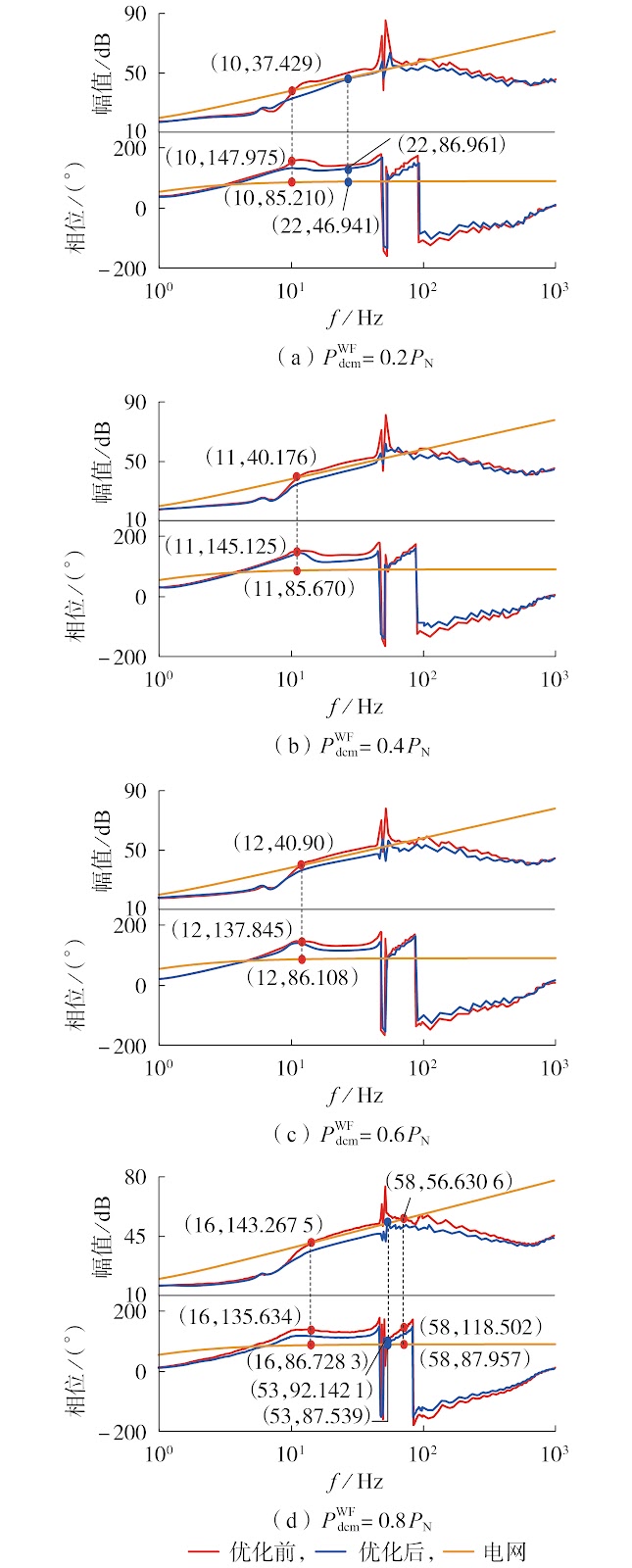
Impedance Modeling and Parameter Optimization Method for Wind Farms Considering Station-Level Control
Large-scale wind farms integrated into weak grids are susceptible to broadband oscillations, a problem that existing impedance models and control parameter optimization methods fail to address systematically because they neglect station-level control and frequency coupling effects. This paper proposes a station-level control strategy based on available power allocation and an adaptive compass search (ACS) algorithm for optimizing station control parameters. A sequence impedance method incorporating frequency coupling effects establishes the aggregated wind farm impedance, and the grid-connected multiple-input multiple-output (MIMO) system is decoupled into positive- and negative-sequence single-input single-output (SISO) impedance models. A high-precision wind farm impedance model that accounts for station-level control is constructed, and the Nyquist criterion evaluates the suppression effect of station control on broadband oscillations. The ACS algorithm optimizes station control parameters to enhance the adaptability of wind farm impedance to external grid impedance, thereby reducing oscillation risk. RT-LAB platform simulations validate the impedance modeling method and control parameter optimization. Results demonstrate that considering station-level control yields a high-precision wind farm impedance model. Compared with genetic algorithm (GA), particle swarm optimization (PSO), grey wolf optimizer (GWO), and sparrow search algorithm (SSA), ACS is more suitable for optimizing wind farm control parameters. Under specific weak-grid conditions, ACS-optimized station control parameters effectively improve grid-connected stability of the wind farm.
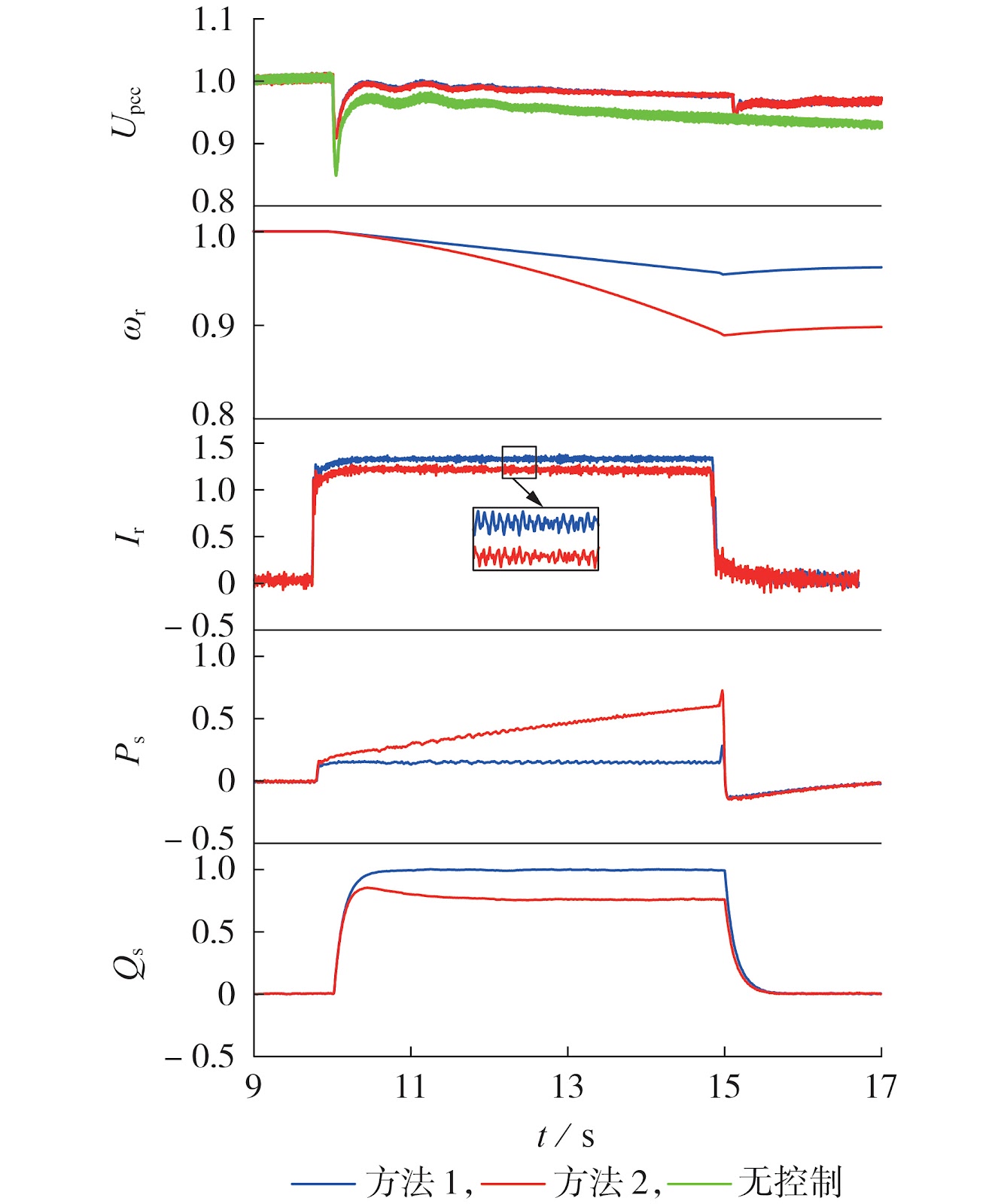
Active and Reactive Power Coordinated Voltage Support Control Method for High-Inertia Energy-Storage Synchronous Condenser
The high-inertia energy-storage synchronous condenser (SC-HI-ES) can provide reactive power support by adjusting excitation current and active power support by actively varying rotor speed. However, the absence of a prime mover makes its control capability difficult to quantify, preventing coordinated active and reactive power support for grid voltage. This paper analyzes the factors influencing SC-HI-ES power control capability, derives rotor current equations considering stator and rotor circuit constraints, and establishes the power controllable range (PCR) under rotor current constraints and speed variations. The relationship between the PCR and voltage support power demand is parsed, and a coordinated active-reactive power voltage support control method is proposed. Case studies validate the method's effectiveness. Results show that the proposed method enhances voltage support and avoids rotor current over-limit. Compared with methods ignoring speed variation or controlling only reactive power, the proposed method dynamically calculates PCR-based power demand under current speed, and through coordinated active and reactive power control, maximally satisfies the point of common coupling voltage target while ensuring rotor current does not exceed allowable values. This provides effective technical support for SC-HI-ES application in new-type power systems. Frequency control capability characterization and frequency-coordinated control are identified as future research directions.
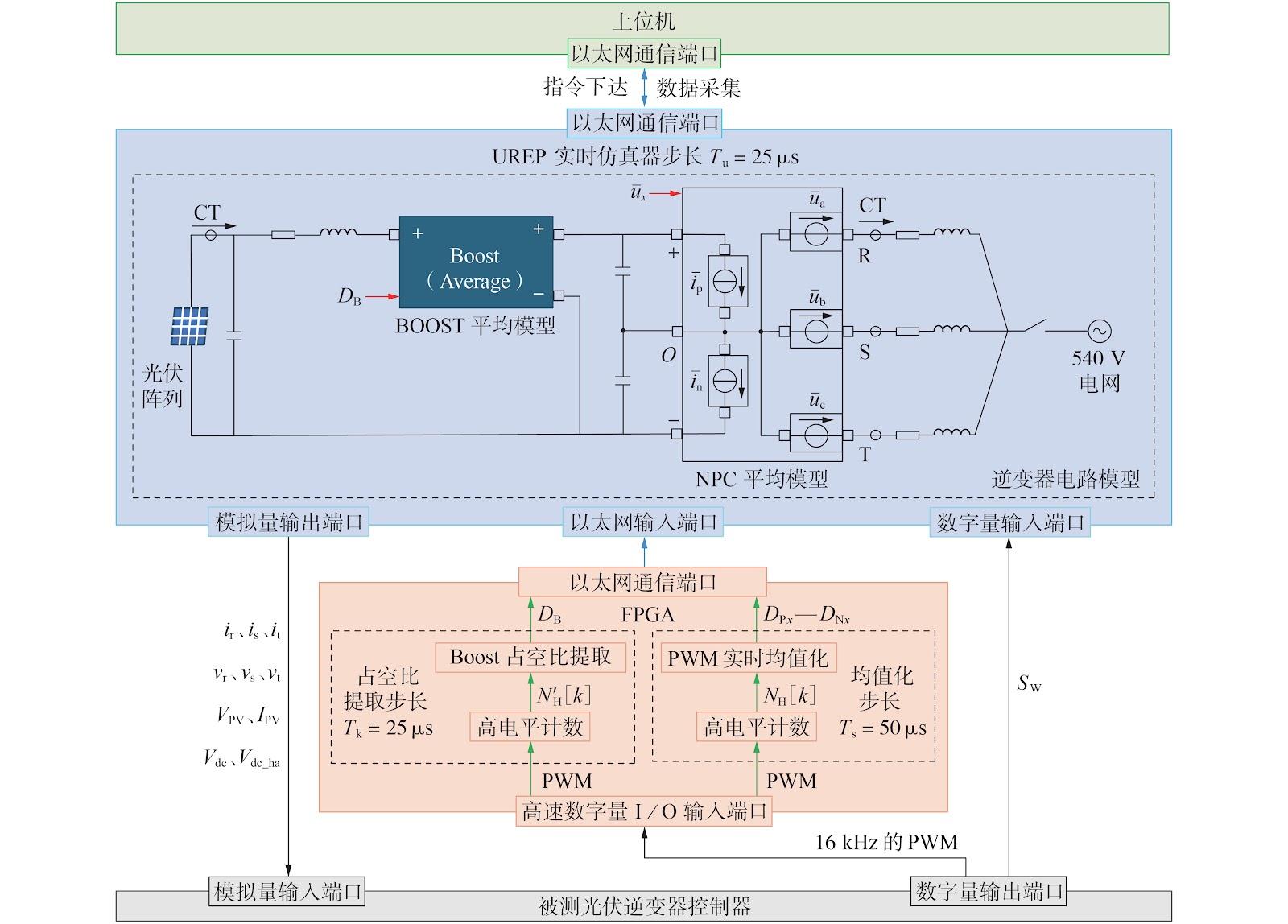
Hardware-in-the-Loop Test Platform for Photovoltaic High-Frequency Controllers Based on UREP + FPGA
Real-time constraints prevent CPU-based electromagnetic transient simulators from accurately sampling high-frequency PWM signals at microsecond step sizes, leading to insufficient HIL test precision and even instability of the closed-loop system. This paper introduces a PWM averaging technique to construct a novel UREP (electromagnetic transient real-time simulator) + FPGA hardware-in-the-loop test platform. To achieve accurate PWM acquisition, the FPGA's nanosecond-level clock resolution increases the number of sampling points within a single switching period from a few points under microsecond simulation steps to several thousand points. The FPGA implements fixed-step PWM averaging, converting discrete switching states into continuous duty cycles that serve as control signals for the UREP-side inverter average model. This technique avoids frequent topology updates and state matrix reconstructions triggered by switching events, reduces high real-time computational resource consumption, improves numerical stability of the in-loop system, and enhances HIL test accuracy under large-step real-time constraints. Simulation cases and industrial-grade controller HIL tests verify the platform's feasibility and accuracy. The platform provides an efficient, reproducible verification scheme for photovoltaic controller control strategies and offers a feasible technical path for domestic electromagnetic transient real-time simulation platforms to conduct high-frequency controller HIL tests.
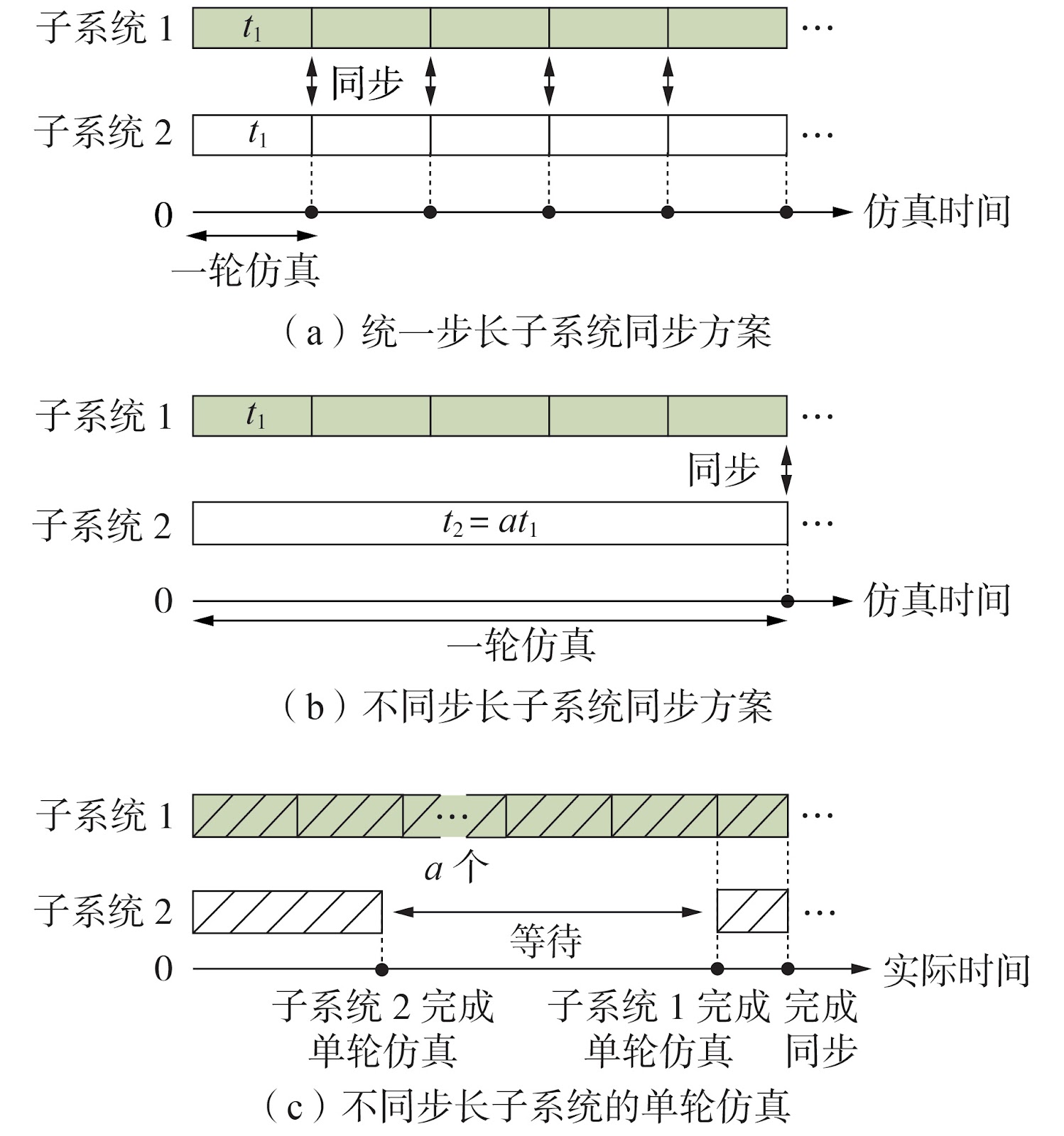
Design and Implementation of a Distributed Simulation Architecture for Modern Power Systems Based on Data Distribution Service
The integration of high-penetration renewable energy and power electronic converters has intensified the dynamic complexity of modern power systems, imposing stringent demands on simulation accuracy and computational efficiency. This paper proposes a distributed simulation architecture based on Data Distribution Service (DDS) that leverages dispersed computing resources to enhance scalability and efficiency while preserving numerical fidelity. The power system model is mathematically decoupled into multiple independently solvable basic subsystems, and a generic data transmission interface is designed using DDS. A time-consumption balancing scheme groups and distributes these subsystems across multiple devices, and a two-layer synchronization strategy enables efficient parallel simulation. The architecture is validated on a two-area four-machine system, the IEEE New England 10-machine 39-bus system, and the WECC 29-machine 179-bus system. Compared with centralized simulation, the average error on the two-area four-machine system remains below 1.05%. Simulation efficiency improvement reaches approximately 10% on the 10-machine 39-bus system and about 48% on the 29-machine 179-bus system. The results confirm high accuracy across different system scales and demonstrate that efficiency gains become more pronounced as system size increases, validating the architecture's scalability and compatibility. The proposed framework offers a promising pathway for large-scale power system simulation and supports future integration with edge computing and cross-platform deployment.
Heterogeneous Weighted Graph Partitioning and Decoupling Optimization Strategy for Electromagnetic Transient Parallel Simulation of AC/DC Distribution Networks
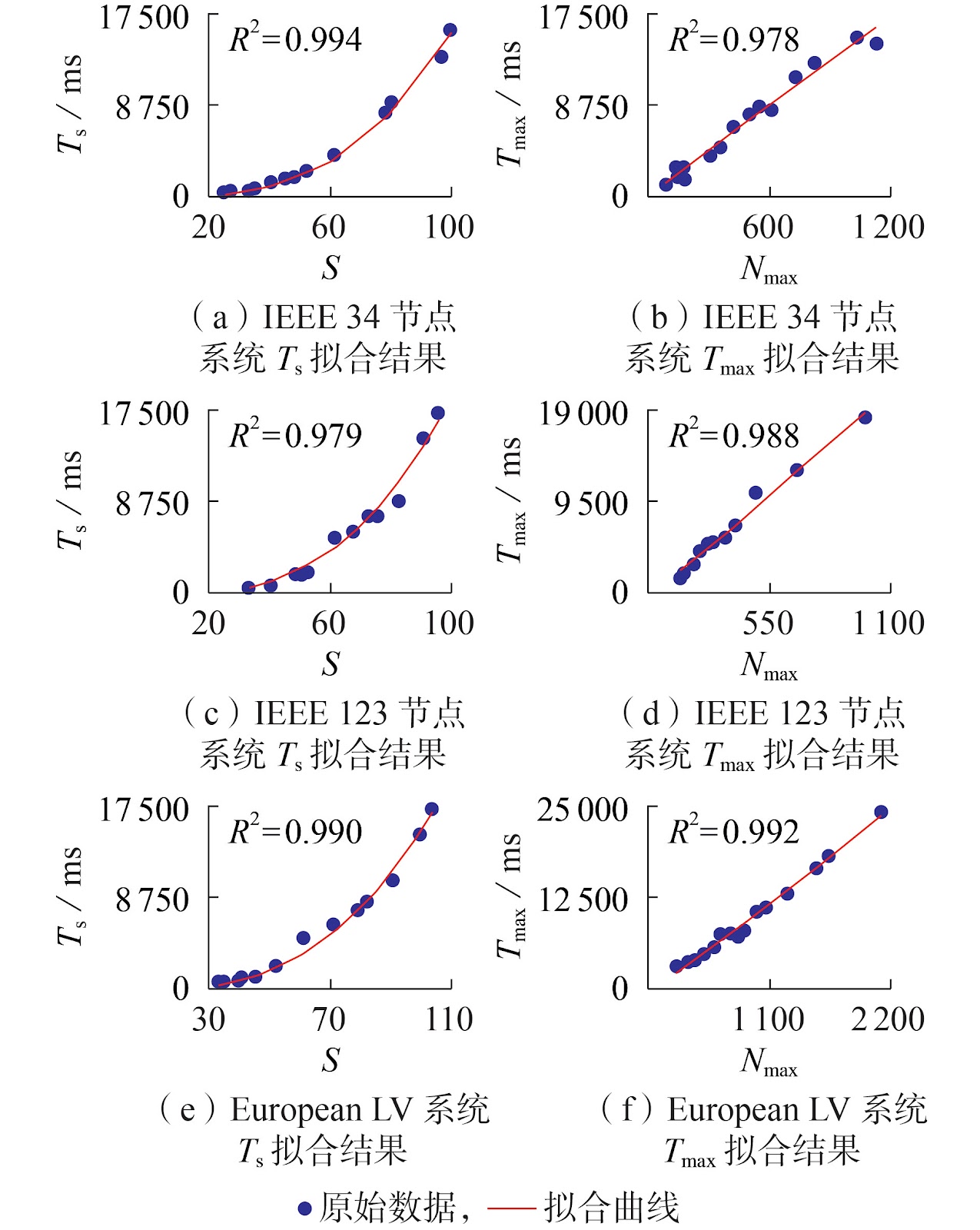
The increasing penetration of power electronic devices in AC/DC distribution networks imposes stringent computational demands on electromagnetic transient (EMT) parallel simulation. Conventional transmission-line delay decoupling methods are ill-suited to the strong electrical coupling characteristic of such networks. This paper proposes a non-delay decoupling parallel simulation acceleration framework based on heterogeneous weighted graph partitioning. An empirical computational cost evaluation model for each parallel decoupling stage is established, and a heterogeneous weighted graph model is constructed to precisely characterize the simulation computational complexity of AC/DC distribution network components, mapping matrix dimensions of device mathematical models to graph node weights. A multi-objective graph partitioning scheme is formulated that simultaneously balances partition computational overhead and minimizes the number of tie-line variables, complemented by an optimal partition number screening strategy. Simulation validation is conducted on three large-scale AC/DC distribution network composite test cases: IEEE 34-node, IEEE 123-node, and European Low Voltage (European LV) systems, all retrofitted with DC sections. Results demonstrate that the proposed empirical computational cost model achieves a simulation time fitting goodness-of-fit R² > 0.97, indicating high predictive accuracy. Under optimal partition configuration, the proposed method attains parallel speedup ratios of 12.11–15.77, significantly outperforming conventional natural partitioning schemes and effectively enhancing the EMT parallel simulation efficiency of AC/DC distribution networks.
Hierarchical Hybrid Non-Delay Decoupling Parallel Method for Electromagnetic Transient Simulation of DC-Collector Offshore Wind Farms
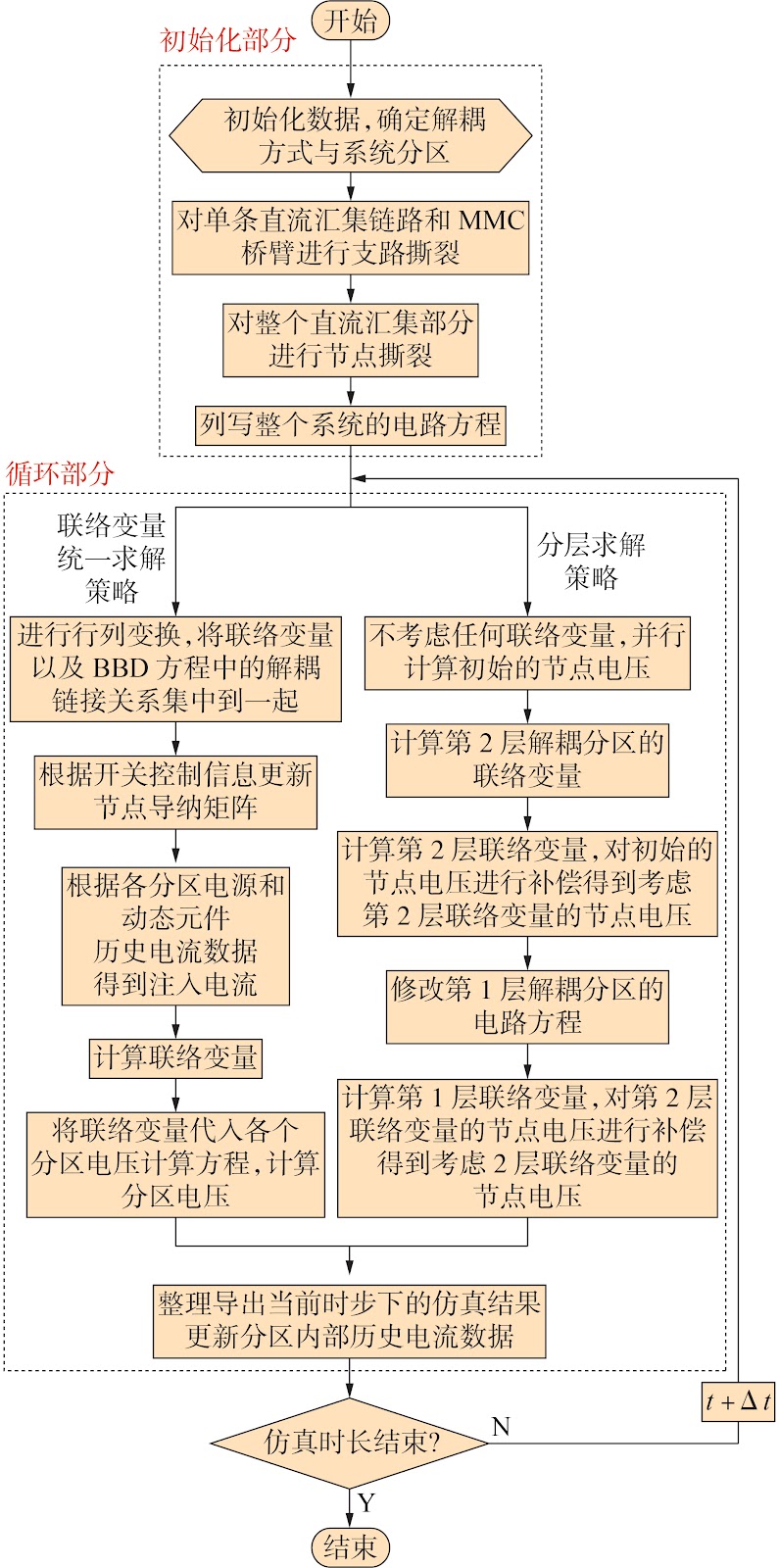
Real-time electromagnetic transient (EMT) simulation of DC-collector offshore wind farms is constrained by microsecond time steps, high model order from cascaded power electronic converters, and the inability of conventional decoupling methods to handle complex series-parallel topologies without introducing artificial delays. Existing non-delay decoupling methods, such as multi-area Thevenin equivalence (MATE) and compensation method, rely on branch tearing and are ill-suited for systems with numerous common-bus partitions, leading to excessive link variables and singular admittance matrices. This paper proposes a hierarchical hybrid non-delay decoupling parallel method that integrates MATE and its dual (node-tearing) approach through a layered architecture. The method constructs a mixed equivalent model tailored to DC-collector offshore wind farms, enabling flexible selection between unified and hierarchical solution modes for link variables based on operating conditions. A complete non-delay decoupling simulation workflow is established and validated on a DC series-parallel grid-connected offshore wind farm test case implemented in MATLAB. Results demonstrate that the proposed method reduces solution matrix dimensions and achieves significant speedup without compromising accuracy. For a 96-turbine wind farm, the hybrid decoupling model achieves an 11.99x speedup over the detailed model, compared to 8.77x for series-only decoupling and 6.22x for parallel-only decoupling. Mean absolute errors (MAE) for key variables remain below 0.1011, and root mean square errors (RMSE) below 0.6318, confirming high fidelity. The method enhances parallel simulation performance and offers a generalizable solution for real-time EMT simulation of large-scale offshore wind farms.