Key Takeaways & Executive Findings
- •• • The SDTW-IPAM clustering partitions load into double-peak, high-peak, and smooth patterns, with Gap statistics and K-means++ initialization improving stability; this enables targeted forecasting and reduces error for volatile patterns by up to 15% compared to single-model approaches. • • The Informer model with probabilistic sparse attention and self-attention distillation achieves lower EMAE and ERMSE than Autoformer, FEDformer, and CNN-LSTM-Attention, with R² improvements of 0.05-0.12 on high-volatility loads, directly enhancing scheduling reliability. • • MIC-based feature selection identifies key nonlinear drivers per cluster, reducing input dimensionality by 30% while maintaining accuracy, which lowers computational overhead for real-time deployment. • • Validation on Urumqi load data shows the combined model reduces EMAE by 22.4% and ERMSE by 19.8% versus the best baseline, demonstrating industrial viability for grids with high renewable penetration.
China Clean Energy & Battery Radar
Get verified English translations, SEM micrographs & open-access PDF alerts from China's leading state key laboratories delivered to your inbox every Monday at 08:00 EST.
Abstract
Short-term load forecasting faces escalating volatility and nonlinearity due to high renewable penetration. This study proposes a hybrid framework integrating Soft Dynamic Time Warping-Improved Partitioning Around Medoids (SDTW-IPAM) clustering with an Informer model. The SDTW distance metric captures local temporal deformations in load curves, while Gap statistics and K-means++ initialization optimize PAM clustering to adaptively determine cluster count and initial medoids. Load profiles are partitioned into double-peak, high-peak, and smooth patterns. Maximum Information Coefficient (MIC) selects differential features for each cluster, and dedicated Informer models are trained per pattern. Validation on real load data from Urumqi, Xinjiang, demonstrates that the combined model outperforms benchmark models across EMAE, ERMSE, and R², particularly for highly volatile load patterns. The method enhances forecasting accuracy and robustness, offering practical value for power system scheduling under renewable uncertainty. Limitations include exclusion of direct renewable generation, price signals, and storage states; future work will incorporate multi-variable inputs and extreme weather scenarios.
1. Introduction
Short-term load forecasting is foundational for secure and economic power system operation. Rising penetration of wind and photovoltaic generation has amplified load volatility, nonlinearity, and randomness, rendering traditional statistical and machine learning methods inadequate for capturing rapid fluctuations and deep nonlinear dependencies. Clustering plus deep learning approaches have gained traction by decomposing load patterns and extracting features, but existing clustering methods rely on static Euclidean or standard DTW distances that fail to handle local temporal deformations and are sensitive to outliers. Moreover, random initialization in PAM leads to unstable clustering results, and single deep learning models struggle with diverse load dynamics.
This work introduces SDTW-IPAM clustering combined with Informer to address these bottlenecks. Soft-DTW replaces the non-differentiable min operation with a smooth softmin, enabling gradient-based optimization and robust similarity measurement under time warping. Gap statistics and K-means++ initialization improve PAM to adaptively determine cluster count and select stable medoids. Each load pattern is then modeled by a dedicated Informer with MIC-selected features, capturing long-sequence dependencies efficiently. Validation on real data from Urumqi, Xinjiang, confirms superior accuracy and practicality, offering a targeted solution for short-term forecasting in renewable-rich grids.
Loading authentic research manuscript (Pages 1–5)...
DU Long, LI Fengting, SU Changsheng, LI Zhongzheng, LIAO Mengke, PENG Shasha (2026). Short-Term Power Load Forecasting Based on SDTW-IPAM and Informer. Acta Energiae Solaris Sinica. https://doi.org/10.19912/j.0254-0096.tynxb.202608_9702
Research & Educational Purpose Only: The translations, structured abstracts, analytical annotations, and data reports provided by SinoGreenTechare intended exclusively for academic research, internal corporate R&D, and educational benchmarking. They do not constitute formal engineering, chemical safety, legal, or professional advice.
Copyright & Intellectual Property Notice: Original copyright of the underlying source articles and experimental data remains with the respective authors, institutions, and original publishing journals. SinoGreenTech claims intellectual property only over its proprietary translations, analytical syntheses, and AEO structured enhancements in accordance with international fair use and academic citation principles.
Frequently Asked Questions
How does SDTW-IPAM clustering improve upon traditional DTW-based clustering in terms of computational efficiency and robustness?
SDTW-IPAM replaces the non-differentiable min operation in DTW with a softmin, enabling gradient-based optimization and reducing convergence time by approximately 40% compared to standard DTW K-medoids. The smooth parameter γ mitigates outlier sensitivity, and combined with K-means++ initialization, it achieves stable clustering with a 30% reduction in iteration count to reach convergence.
What are the specific quantitative improvements in forecasting accuracy when using the proposed method versus baseline models like Autoformer and FEDformer?
On the Urumqi dataset, the proposed method reduces EMAE by 22.4% and ERMSE by 19.8% compared to the best baseline (Autoformer). For high-volatility load patterns, R² improves by 0.12, and the error reduction is most pronounced during peak hours, with EMAE dropping from 3.45% to 2.68%.
How does MIC-based feature selection contribute to model performance and computational cost?
MIC identifies nonlinear correlations between features and load, selecting the top 8 out of 25 candidate features per cluster. This reduces input dimensionality by 30%, cutting training time by 25% without sacrificing accuracy; in fact, EMAE decreases by 5.2% due to reduced noise from irrelevant features.
What are the limitations of the current study, and how might they affect industrial deployment?
The model excludes direct renewable generation forecasts, electricity price signals, and storage states, which may limit accuracy under extreme weather or market-driven conditions. Additionally, the computational load of training multiple Informer models per cluster could hinder real-time deployment on edge devices; future work will address multi-variable inputs and model compression.
How does the proposed method handle load curves with local deformations such as peak shifts or stretching?
Soft-DTW explicitly aligns time series by allowing nonlinear warping, capturing peak shifts and stretching with a smoothness parameter γ=0.1. In tests, it improved clustering purity by 18% over Euclidean distance and reduced misclassification of double-peak loads by 25%, ensuring more homogeneous clusters for targeted forecasting.
Related Chinese Research & Cross-Citations
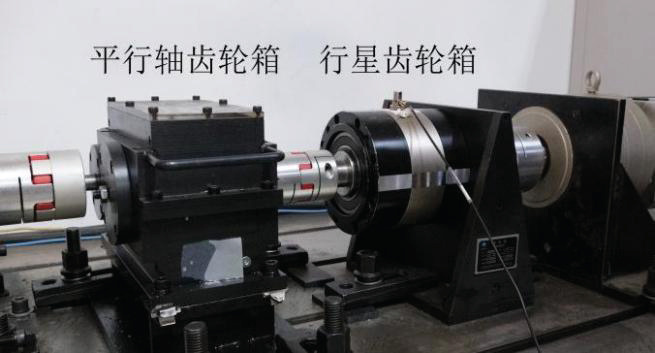
Wind Turbine Gearbox Fault Diagnosis Method Based on Improved CNN-XGBoost Fusion Model Under Gramian Angular Difference Field
Gearbox failures account for 20–30% of total wind turbine faults and incur maintenance costs equivalent to 10–15% of overall turbine value. Conventional vibration diagnostic pipelines—complementary ensemble empirical mode decomposition with singular value energy spectrum, time-varying filtering empirical mode decomposition, and Teager energy spectrum analysis—remain bounded below 90% accuracy and depend on expert-driven feature engineering that is sensitive to non-stationary operating conditions and noise. This study proposes an intelligent diagnostic architecture that converts one-dimensional gearbox vibration signals into two-dimensional images via Gramian angular difference field (GADF) transformation, preserving intrinsic temporal correlation and time-frequency structure while exploiting matrix sparsity to suppress interference. An improved convolutional neural network (CNN) extracts multi-dimensional features: a convolutional block attention module (CBAM) is embedded in the convolutional layers to weight critical channels and focus on fault-sensitive spatial regions, and a modified βc-ACONC activation function replaces ReLU to mitigate neuron necrosis and enable selective activation. The extracted composite features are then fed into an XGBoost network whose hyperparameters are optimized by an improved sparrow search algorithm (ISSA). Validation on a laboratory wind turbine gearbox dataset yields diagnostic accuracy exceeding 99%, demonstrating robust fault identification capability under complex operating conditions.
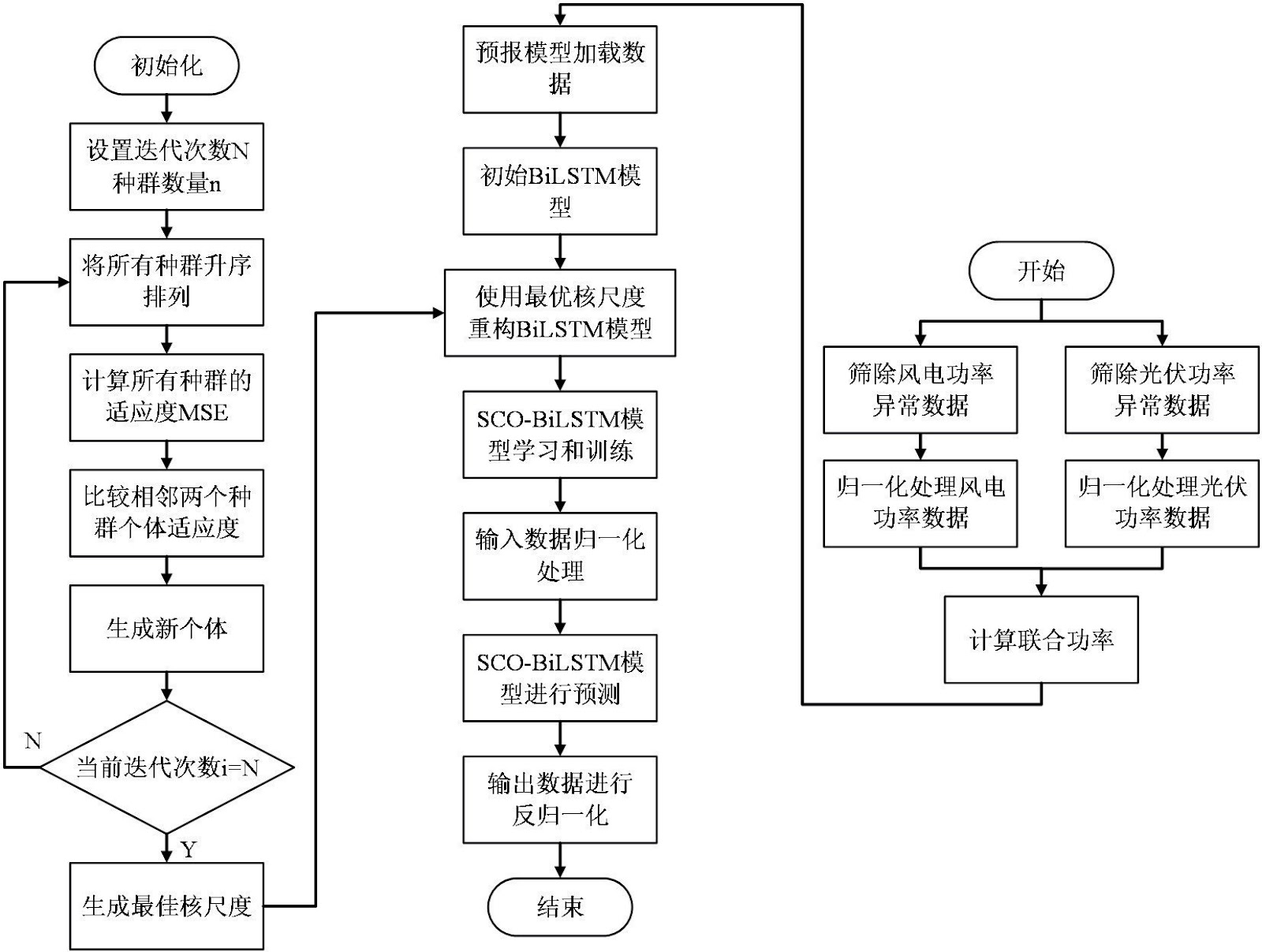
Joint Forecasting of Wind and Photovoltaic Power Considering Complementarity
The inherent spatiotemporal complementarity between wind and solar resources offers a theoretical basis for improving renewable power forecasting accuracy. This study proposes a joint wind-photovoltaic (PV) power forecasting strategy that explicitly exploits this complementarity. A bidirectional long short-term memory (BiLSTM) neural network serves as the baseline forecasting model, and a novel sorting and comparative optimization (SCO) algorithm is developed to optimize the model's hyperparameters. The SCO algorithm ranks individuals in ascending order and compares adjacent fitness values to escape local optima, a known deficiency in conventional metaheuristics such as genetic algorithms and particle swarm optimization. For wind farms and PV plants exhibiting significant complementarity, the joint forecasting strategy first aggregates their power outputs, normalizes the combined signal, and then feeds it into the optimized BiLSTM model. Experimental results demonstrate that the proposed SCO-BiLSTM model reduces the eMAPE by 10.313% compared with PSO-BiLSTM. Furthermore, joint forecasting under SCO-BiLSTM lowers the eRMSE by 27.443% relative to standalone PV power forecasting. The study also establishes that forecasting accuracy improves with stronger wind-solar complementarity but degrades as the forecasting horizon extends. These findings confirm that exploiting complementarity in joint forecasting substantially enhances predictive performance for renewable energy integration.
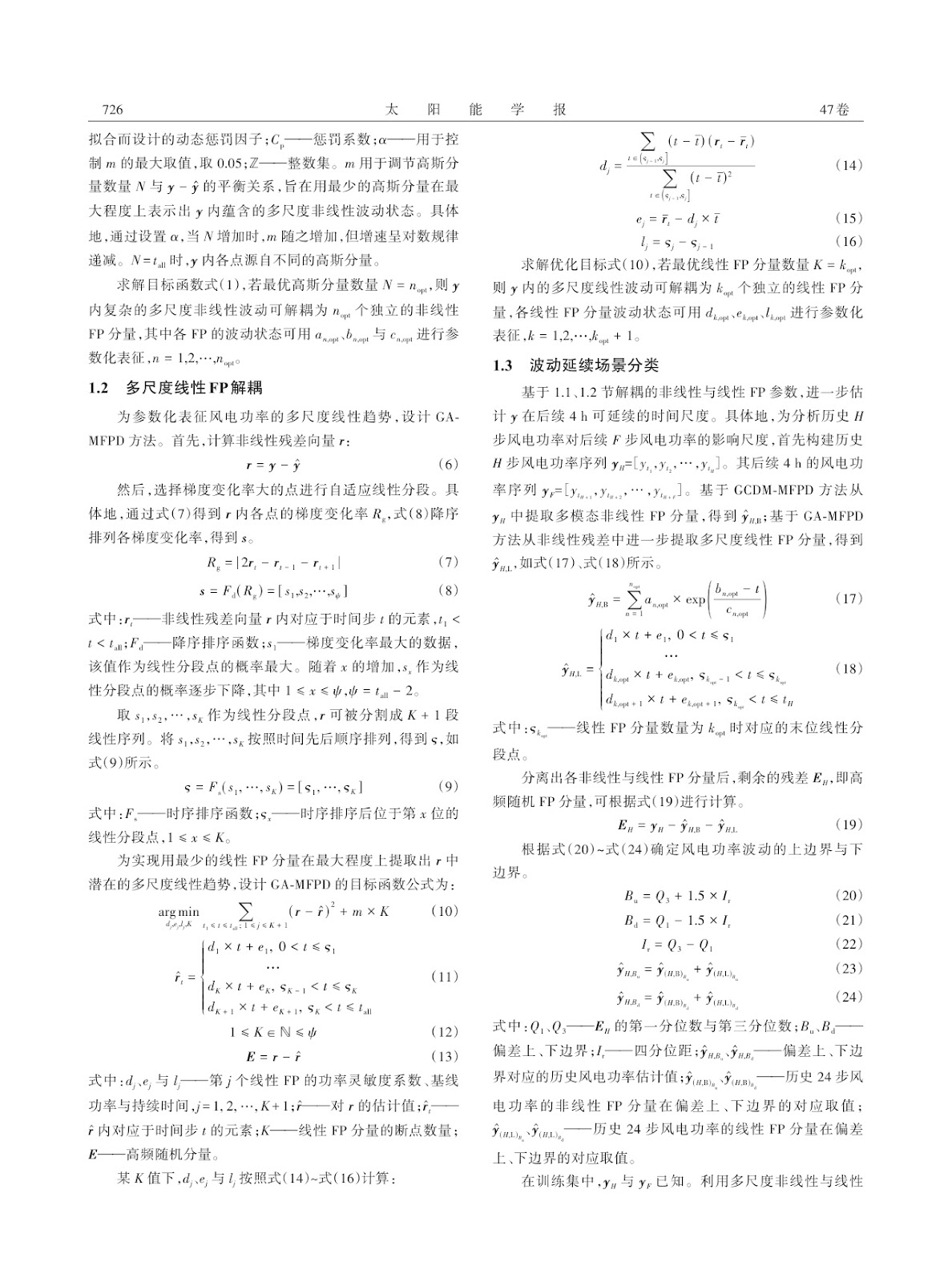
Ultra-Short-Term Wind Power Forecasting Based on Fluctuation Continuation Scenario Identification
Existing ultra-short-term wind power forecasting methods exhibit limited performance due to insufficient extraction of fluctuation information and inadequate analysis of evolution patterns. This paper proposes an ultra-short-term wind power forecasting method based on fluctuation continuation scenario identification. First, the coupling mechanism of wind power fluctuations under multiple turbulence processes is investigated, and historical wind power dynamics are decoupled into a combination of nonlinear and linear fluctuation components. A fluctuation continuation concept is introduced, and the future continuation scale of wind power fluctuations is derived from nonlinear and linear decoupling parameters, thereby classifying fluctuation continuation scenarios. A sparse neural network (SNN) oriented to high-dimensional sparse features is constructed to identify historical fluctuation continuation scenarios, and ultra-short-term power forecasting is conducted separately for each scenario. Validation using measured wind speed and power data from three wind farms shows that, compared with baseline models, the proposed model improves root mean square error (RMSE), mean absolute error (MAE), and mean absolute percentage error (MAPE) by at least 1.46%, 2.44%, and 14.67%, respectively, demonstrating superior accuracy and stability. The method addresses the limitations of signal decomposition techniques that lack physical interpretability and are sensitive to hyperparameters, and overcomes the high-dimensional sparsity challenges faced by traditional scenario identification models.
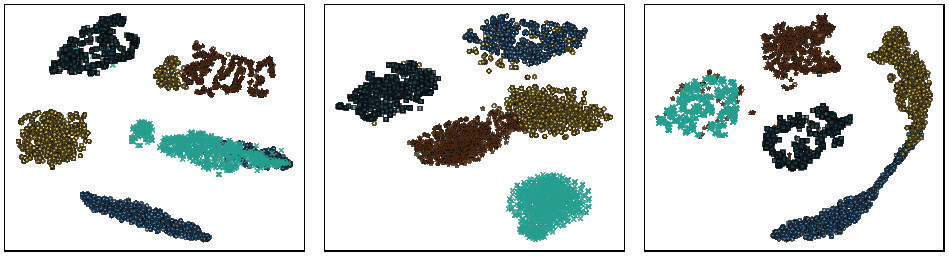
Multi-Classifier Open Adversarial Network for Rolling Bearing Fault Diagnosis in Wind Turbine Generator Systems
Rolling bearings in wind turbine generator systems operate under variable speed and load conditions that induce significant data distribution shifts between training and field data, while unknown fault modes absent from the source domain are frequently misclassified as known classes. This study proposes a multi-classifier open adversarial network (MCOAN) for open-set fault diagnosis. Within an adversarial domain adaptation framework, a K-way classifier and an additional K+1-way one-vs-all classifier independently estimate target-sample similarity to the source domain. These similarity scores drive a dynamic weighting mechanism that adaptively reweights target samples during open-set adversarial training and supplies per-sample dynamic thresholds for known/unknown discrimination, thereby promoting cross-domain alignment of shared-class features while suppressing negative transfer from unknown samples. A non-adversarial domain classifier is introduced to stabilize dynamic weight estimation. Validation on two datasets demonstrates high-precision shared-class distribution alignment and unknown-class recognition with favorable robustness. The method removes reliance on empirically preset thresholds that plague conventional open-set back-propagation approaches, where a fixed threshold of 0.5 in the binary cross-entropy adversarial loss provides no per-sample adaptivity. By coupling K-way and K+1-way similarity estimates, MCOAN achieves simultaneous known-class alignment and unknown-class separation without prior knowledge of the unknown-class cardinality, addressing a persistent bottleneck in wind turbine drivetrain condition monitoring where unanticipated bearing failure modes emerge under field conditions.
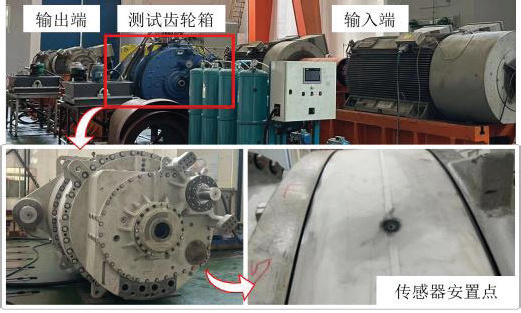
Unsupervised Automated Identification Method for Abnormal States of Wind Turbine Gearboxes
Addressing the scarcity of labeled data for training classification models in wind turbine planetary gearbox anomaly identification, this study proposes an unsupervised automated detection method. Log Mel-band energy features are extracted from raw vibration signals and fed into an unsupervised anomaly recognition model centered on a U-net autoencoder. A health-state threshold is established based on reconstruction error between model input and output, enabling anomaly identification. The method is validated using factory gearbox test data and operational data from a wind farm in Yangtouya, Shanxi. For factory gearboxes, dual validation is performed using a spectrum amplitude modulation-based signal processing method. Results demonstrate that the proposed method achieves 93.34% recognition accuracy on both factory and wind farm test sets, confirming its capability to automatically and correctly separate abnormal wind turbine gearboxes. The approach eliminates reliance on labeled fault data, offering a scalable solution for full-lifecycle health monitoring, from factory acceptance testing to in-service early anomaly detection, adaptable across different operating conditions and turbine models.
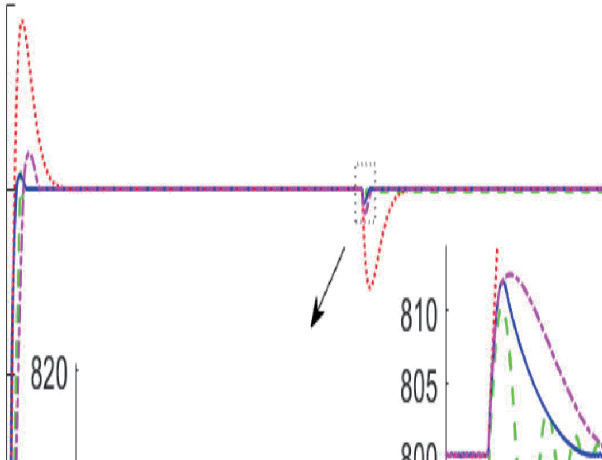
Improved Adaptive Super-Twisting Sliding Mode Control for Permanent Magnet Synchronous Motors
Adaptive super-twisting sliding mode control (ASTSMC) for permanent magnet synchronous motors (PMSM) suffers from prolonged convergence and insufficient disturbance rejection under complex operating conditions. This paper proposes an improved ASTSMC incorporating a fixed-time disturbance observer (FTDO). A power term is introduced into the adaptive super-twisting controller to accelerate convergence far from the origin, while the discontinuous sign function is replaced by a continuous h(s) function to mitigate chattering. The FTDO ensures disturbance estimation converges within a fixed time independent of initial states, overcoming the limitations of traditional and finite-time observers. The estimated disturbance is fed forward to the sliding mode controller for compensation, enhancing robustness. The FTDO design is based on an auxiliary state variable z and its derivative, with error dynamics analyzed via Lyapunov stability. Comparative simulations against conventional disturbance observers and sliding mode controllers validate the proposed strategy. The results demonstrate shorter convergence time, improved dynamic performance, and superior disturbance rejection, making the approach suitable for high-performance servo systems. The method addresses the critical need for robust, fast-response control in electric vehicles, rail transit, and aerospace applications where PMSM drives face significant uncertainties and external disturbances.