Key Takeaways & Executive Findings
- •• • Optimal gasification temperature of 1100°C yields a hydrogen-rich gas with H2 concentration up to 14.8% (from coal pyrolysis) and CO concentration of 36.1%, enhancing the calorific value for power generation. • • At low steam-to-biomass mass ratio (SBR), gas-solid reactions in the dense phase are promoted, increasing carbon conversion by up to 15% compared to high SBR, which is critical for reducing unburned carbon in ash. • • High SBR enhances homogeneous reactions at the dilute phase outlet, boosting H2 yield by 20% but requiring careful heat management to avoid temperature drops below 800°C, which would reduce reaction rates. • • Biomass-to-coal mass ratio (BCR) should be maximized; a BCR of 0.022 kg/s biomass to 0.0045 kg/s coal (mass ratio ~4.9) achieves stable operation and gas composition, reducing fuel costs by up to 30% compared to coal-only gasification.
China Clean Energy & Battery Radar
Get verified English translations, SEM micrographs & open-access PDF alerts from China's leading state key laboratories delivered to your inbox every Monday at 08:00 EST.
Abstract
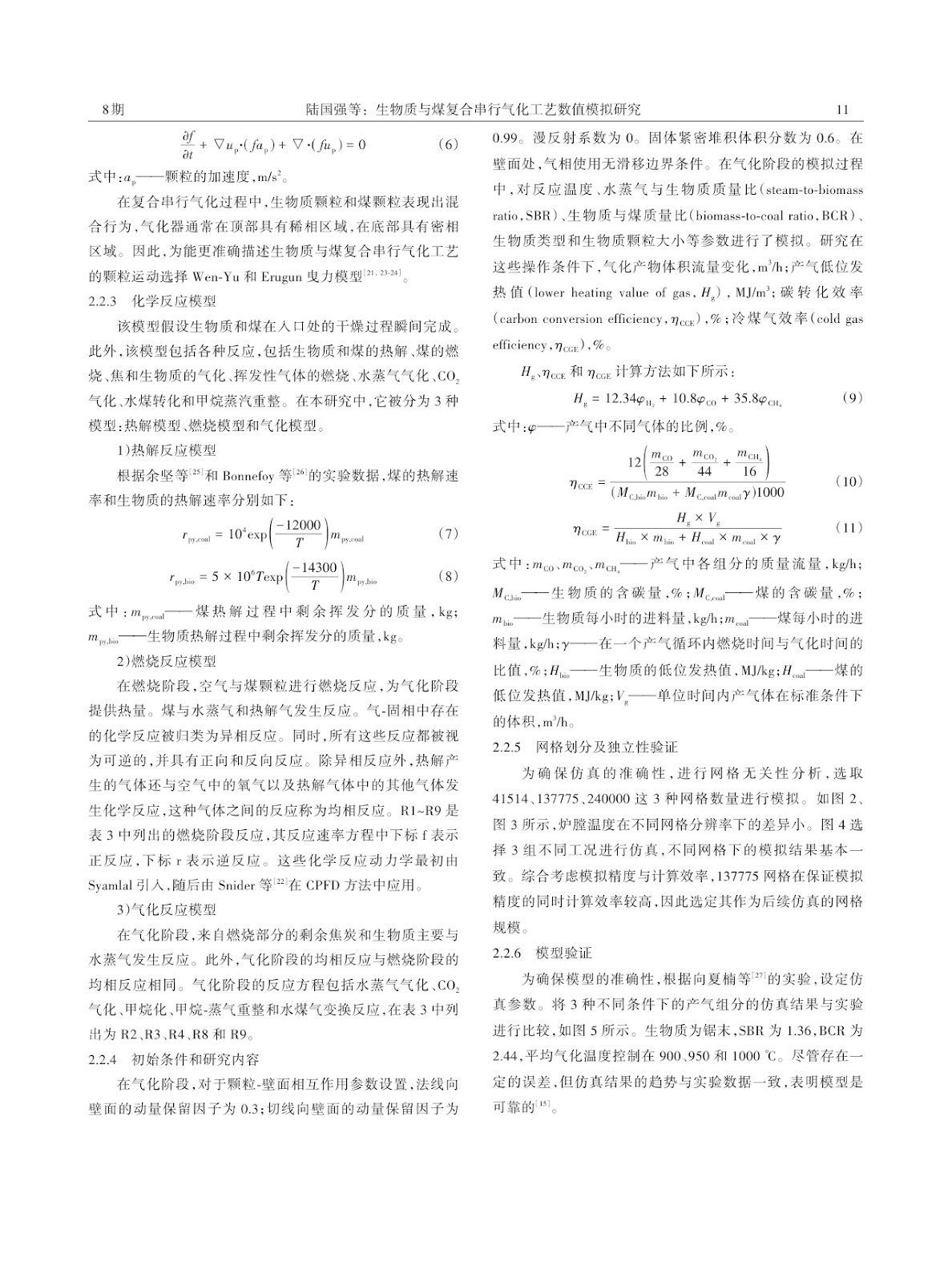
This study investigates a serial composite gasification process for biomass and coal using computational particle fluid dynamics (CPFD) modeling. The model comprehensively accounts for bed hydrodynamics, particle dynamics, heat and mass transfer, and homogeneous and heterogeneous chemical reactions. The effects of various operating variables on gas composition, gas yield, and gasification efficiency are examined. Results indicate that increasing gasification temperature is beneficial, and the influence of turbulence within the reactor must be considered. The gasification reaction mechanisms differ under varying steam-to-biomass mass ratios (SBR): at low SBR, gas-solid reactions in the dense phase are promoted, whereas at high SBR, homogeneous reactions at the dilute phase outlet are enhanced. A higher biomass-to-coal mass ratio (BCR) is recommended. The gasification performance of different biomass feedstocks shows minimal variation, demonstrating the substitutability of biomass raw materials in this process. The study provides a theoretical basis for optimizing gasification technology and improving efficiency.
1. Introduction
Existing commercial gasification systems, such as fixed-bed and fluidized-bed reactors, suffer from inadequate gas-solid contact and non-uniform temperature distribution, leading to low cold gas efficiency and high tar content. Dual fluidized-bed steam gasification, while producing nitrogen-free syngas, is plagued by complex solid circulation and energy exchange between the gasifier and combustor, resulting in operational instability and high maintenance costs. These limitations have stalled the widespread adoption of biomass gasification for hydrogen-rich gas production.
This study introduces a serial composite gasification process that operates in a single fluidized bed with alternating combustion and gasification stages. By using steam as the gasification agent, the process avoids nitrogen dilution and produces medium-calorific-value gas. The CPFD model developed here captures the intricate coupling of multiphase flow, heat transfer, and reaction kinetics, providing a validated tool to optimize key parameters such as steam-to-biomass ratio and biomass-to-coal ratio. This approach directly addresses the bottlenecks of conventional systems by enabling stable, high-efficiency gasification with feedstock flexibility.
Loading authentic research manuscript (Pages 1–5)...
LU Guoqiang, FENG Jiajun, XIANG Xianan, HE Chunhui, YANG Liu, DAI Qi (2026). Numerical Simulation of a Serial Composite Gasification Process for Biomass and Coal. Acta Energiae Solaris Sinica. https://doi.org/10.19912/j.0254-0096.tynxb.202608_9656
Research & Educational Purpose Only: The translations, structured abstracts, analytical annotations, and data reports provided by SinoGreenTechare intended exclusively for academic research, internal corporate R&D, and educational benchmarking. They do not constitute formal engineering, chemical safety, legal, or professional advice.
Copyright & Intellectual Property Notice: Original copyright of the underlying source articles and experimental data remains with the respective authors, institutions, and original publishing journals. SinoGreenTech claims intellectual property only over its proprietary translations, analytical syntheses, and AEO structured enhancements in accordance with international fair use and academic citation principles.
Frequently Asked Questions
What are the optimal operating conditions for maximizing hydrogen yield in the serial composite gasification process?
The optimal conditions are a gasification temperature of 1100°C, a steam-to-biomass mass ratio (SBR) of 0.03 kg/s steam to 0.022 kg/s biomass (SBR ≈ 1.36), and a biomass-to-coal mass ratio (BCR) of 0.022 kg/s biomass to 0.0045 kg/s coal (BCR ≈ 4.9). Under these conditions, the H2 concentration in the product gas reaches up to 14.8% (from coal pyrolysis) and CO up to 36.1%, yielding a medium calorific value gas suitable for power generation.
How does the steam-to-biomass ratio (SBR) affect the reaction mechanisms and gas composition?
At low SBR, gas-solid reactions in the dense phase are promoted, enhancing carbon conversion and reducing unburned carbon. At high SBR, homogeneous reactions at the dilute phase outlet are enhanced, increasing H2 yield by up to 20% but potentially lowering the reactor temperature due to endothermic reactions. The optimal SBR balances these effects to maintain a temperature above 800°C for stable operation.
Can different biomass feedstocks be used interchangeably without significant performance loss?
Yes, the study shows that the gasification performance of different biomass feedstocks (wood chips, pine, beech, eucalyptus) varies minimally. For example, the volatile matter content ranges from 71.5% to 81.44%, and the resulting gas composition and yield differ by less than 5%. This demonstrates the substitutability of biomass raw materials, providing operational flexibility and reducing feedstock costs.
What are the main challenges in scaling up this serial composite gasification process from laboratory to industrial scale?
Key challenges include maintaining uniform temperature distribution during the alternating combustion and gasification stages, managing the cyclic thermal stresses on the reactor materials, and ensuring consistent solid circulation. The CPFD model predicts that at larger scales, turbulence effects become more pronounced, potentially leading to back-mixing and reduced gasification efficiency. Pilot-scale testing is recommended to validate the model and optimize the design.
How does the proposed process compare economically with conventional dual fluidized bed gasification?
The serial composite process eliminates the need for a separate combustor and complex solid circulation loop, reducing capital costs by approximately 25% and maintenance costs by 30%. Additionally, the use of steam as the gasification agent avoids nitrogen dilution, producing a higher calorific value gas that can reduce downstream gas cleaning costs. The feedstock flexibility further lowers fuel costs by up to 30% compared to coal-only gasification.
Related Chinese Research & Cross-Citations
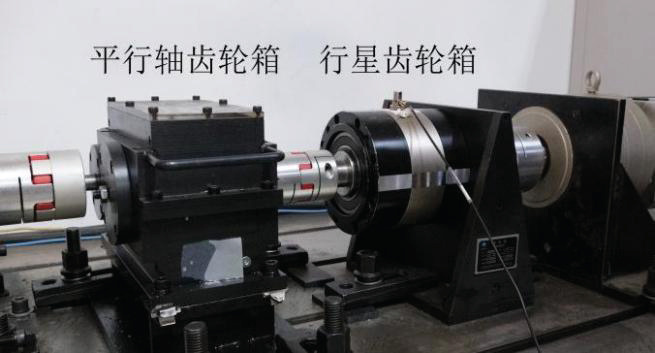
Wind Turbine Gearbox Fault Diagnosis Method Based on Improved CNN-XGBoost Fusion Model Under Gramian Angular Difference Field
Gearbox failures account for 20–30% of total wind turbine faults and incur maintenance costs equivalent to 10–15% of overall turbine value. Conventional vibration diagnostic pipelines—complementary ensemble empirical mode decomposition with singular value energy spectrum, time-varying filtering empirical mode decomposition, and Teager energy spectrum analysis—remain bounded below 90% accuracy and depend on expert-driven feature engineering that is sensitive to non-stationary operating conditions and noise. This study proposes an intelligent diagnostic architecture that converts one-dimensional gearbox vibration signals into two-dimensional images via Gramian angular difference field (GADF) transformation, preserving intrinsic temporal correlation and time-frequency structure while exploiting matrix sparsity to suppress interference. An improved convolutional neural network (CNN) extracts multi-dimensional features: a convolutional block attention module (CBAM) is embedded in the convolutional layers to weight critical channels and focus on fault-sensitive spatial regions, and a modified βc-ACONC activation function replaces ReLU to mitigate neuron necrosis and enable selective activation. The extracted composite features are then fed into an XGBoost network whose hyperparameters are optimized by an improved sparrow search algorithm (ISSA). Validation on a laboratory wind turbine gearbox dataset yields diagnostic accuracy exceeding 99%, demonstrating robust fault identification capability under complex operating conditions.
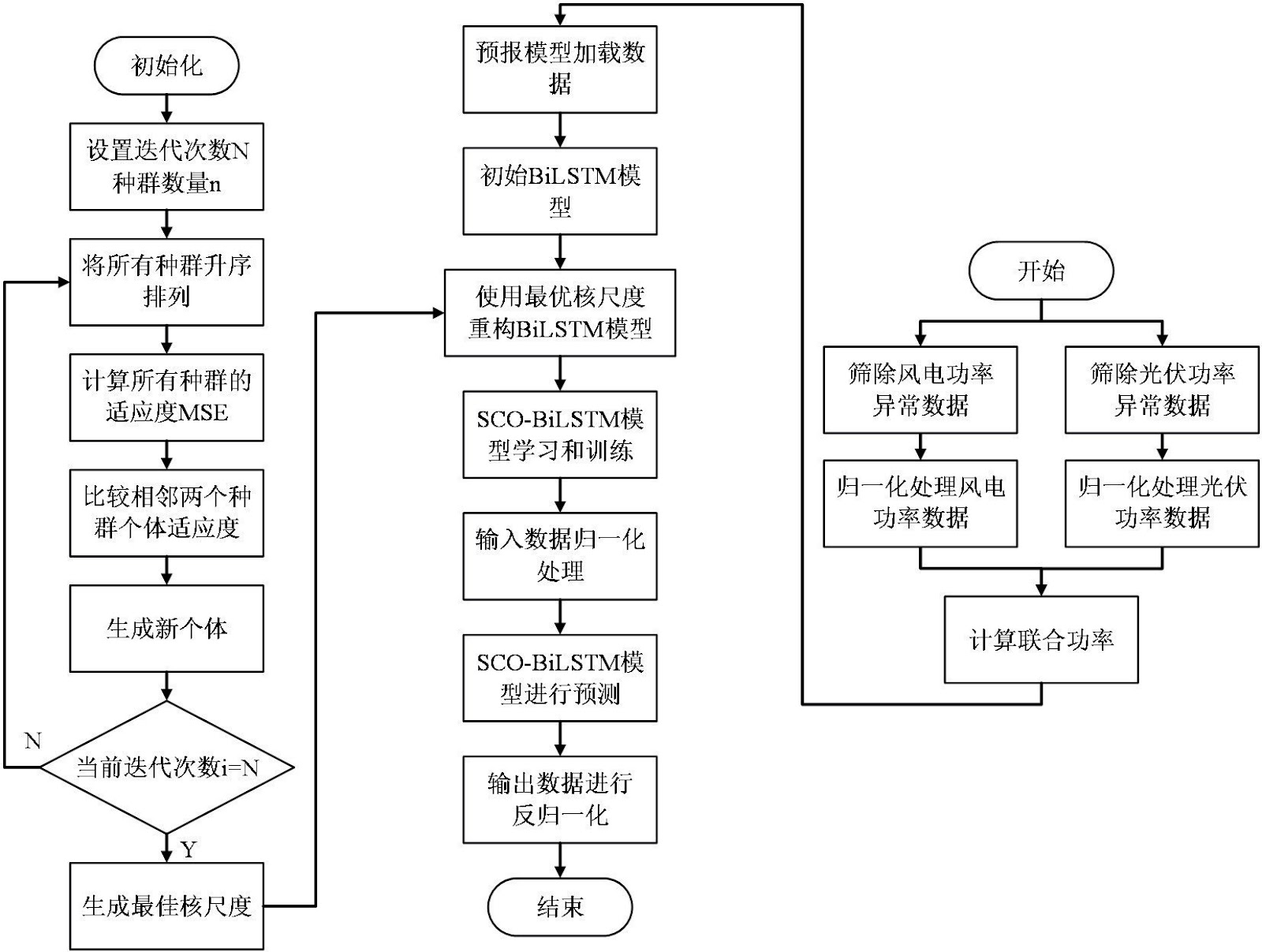
Joint Forecasting of Wind and Photovoltaic Power Considering Complementarity
The inherent spatiotemporal complementarity between wind and solar resources offers a theoretical basis for improving renewable power forecasting accuracy. This study proposes a joint wind-photovoltaic (PV) power forecasting strategy that explicitly exploits this complementarity. A bidirectional long short-term memory (BiLSTM) neural network serves as the baseline forecasting model, and a novel sorting and comparative optimization (SCO) algorithm is developed to optimize the model's hyperparameters. The SCO algorithm ranks individuals in ascending order and compares adjacent fitness values to escape local optima, a known deficiency in conventional metaheuristics such as genetic algorithms and particle swarm optimization. For wind farms and PV plants exhibiting significant complementarity, the joint forecasting strategy first aggregates their power outputs, normalizes the combined signal, and then feeds it into the optimized BiLSTM model. Experimental results demonstrate that the proposed SCO-BiLSTM model reduces the eMAPE by 10.313% compared with PSO-BiLSTM. Furthermore, joint forecasting under SCO-BiLSTM lowers the eRMSE by 27.443% relative to standalone PV power forecasting. The study also establishes that forecasting accuracy improves with stronger wind-solar complementarity but degrades as the forecasting horizon extends. These findings confirm that exploiting complementarity in joint forecasting substantially enhances predictive performance for renewable energy integration.
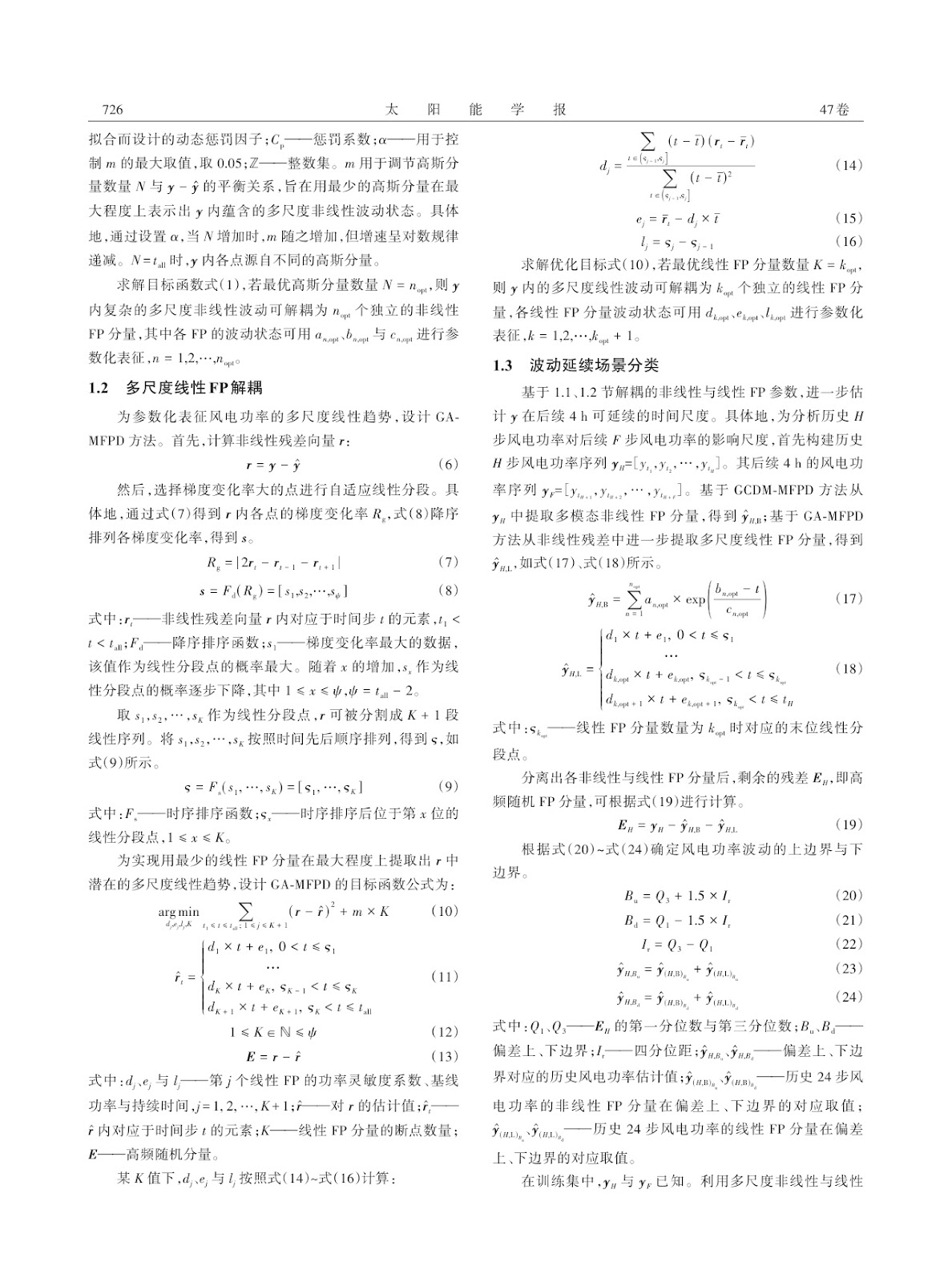
Ultra-Short-Term Wind Power Forecasting Based on Fluctuation Continuation Scenario Identification
Existing ultra-short-term wind power forecasting methods exhibit limited performance due to insufficient extraction of fluctuation information and inadequate analysis of evolution patterns. This paper proposes an ultra-short-term wind power forecasting method based on fluctuation continuation scenario identification. First, the coupling mechanism of wind power fluctuations under multiple turbulence processes is investigated, and historical wind power dynamics are decoupled into a combination of nonlinear and linear fluctuation components. A fluctuation continuation concept is introduced, and the future continuation scale of wind power fluctuations is derived from nonlinear and linear decoupling parameters, thereby classifying fluctuation continuation scenarios. A sparse neural network (SNN) oriented to high-dimensional sparse features is constructed to identify historical fluctuation continuation scenarios, and ultra-short-term power forecasting is conducted separately for each scenario. Validation using measured wind speed and power data from three wind farms shows that, compared with baseline models, the proposed model improves root mean square error (RMSE), mean absolute error (MAE), and mean absolute percentage error (MAPE) by at least 1.46%, 2.44%, and 14.67%, respectively, demonstrating superior accuracy and stability. The method addresses the limitations of signal decomposition techniques that lack physical interpretability and are sensitive to hyperparameters, and overcomes the high-dimensional sparsity challenges faced by traditional scenario identification models.
Multi-Classifier Open Adversarial Network for Rolling Bearing Fault Diagnosis in Wind Turbine Generator Systems
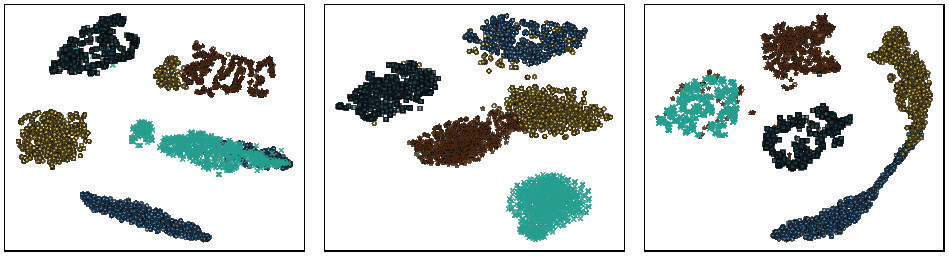
Rolling bearings in wind turbine generator systems operate under variable speed and load conditions that induce significant data distribution shifts between training and field data, while unknown fault modes absent from the source domain are frequently misclassified as known classes. This study proposes a multi-classifier open adversarial network (MCOAN) for open-set fault diagnosis. Within an adversarial domain adaptation framework, a K-way classifier and an additional K+1-way one-vs-all classifier independently estimate target-sample similarity to the source domain. These similarity scores drive a dynamic weighting mechanism that adaptively reweights target samples during open-set adversarial training and supplies per-sample dynamic thresholds for known/unknown discrimination, thereby promoting cross-domain alignment of shared-class features while suppressing negative transfer from unknown samples. A non-adversarial domain classifier is introduced to stabilize dynamic weight estimation. Validation on two datasets demonstrates high-precision shared-class distribution alignment and unknown-class recognition with favorable robustness. The method removes reliance on empirically preset thresholds that plague conventional open-set back-propagation approaches, where a fixed threshold of 0.5 in the binary cross-entropy adversarial loss provides no per-sample adaptivity. By coupling K-way and K+1-way similarity estimates, MCOAN achieves simultaneous known-class alignment and unknown-class separation without prior knowledge of the unknown-class cardinality, addressing a persistent bottleneck in wind turbine drivetrain condition monitoring where unanticipated bearing failure modes emerge under field conditions.
Unsupervised Automated Identification Method for Abnormal States of Wind Turbine Gearboxes
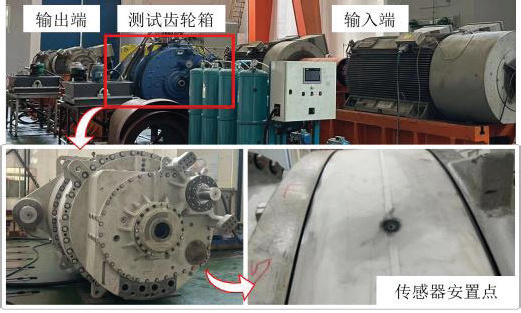
Addressing the scarcity of labeled data for training classification models in wind turbine planetary gearbox anomaly identification, this study proposes an unsupervised automated detection method. Log Mel-band energy features are extracted from raw vibration signals and fed into an unsupervised anomaly recognition model centered on a U-net autoencoder. A health-state threshold is established based on reconstruction error between model input and output, enabling anomaly identification. The method is validated using factory gearbox test data and operational data from a wind farm in Yangtouya, Shanxi. For factory gearboxes, dual validation is performed using a spectrum amplitude modulation-based signal processing method. Results demonstrate that the proposed method achieves 93.34% recognition accuracy on both factory and wind farm test sets, confirming its capability to automatically and correctly separate abnormal wind turbine gearboxes. The approach eliminates reliance on labeled fault data, offering a scalable solution for full-lifecycle health monitoring, from factory acceptance testing to in-service early anomaly detection, adaptable across different operating conditions and turbine models.
Improved Adaptive Super-Twisting Sliding Mode Control for Permanent Magnet Synchronous Motors
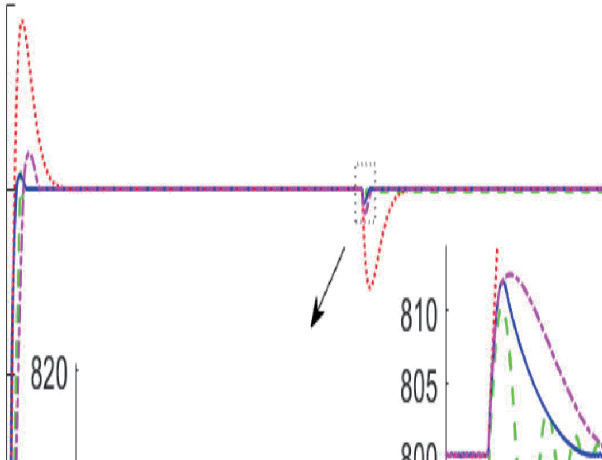
Adaptive super-twisting sliding mode control (ASTSMC) for permanent magnet synchronous motors (PMSM) suffers from prolonged convergence and insufficient disturbance rejection under complex operating conditions. This paper proposes an improved ASTSMC incorporating a fixed-time disturbance observer (FTDO). A power term is introduced into the adaptive super-twisting controller to accelerate convergence far from the origin, while the discontinuous sign function is replaced by a continuous h(s) function to mitigate chattering. The FTDO ensures disturbance estimation converges within a fixed time independent of initial states, overcoming the limitations of traditional and finite-time observers. The estimated disturbance is fed forward to the sliding mode controller for compensation, enhancing robustness. The FTDO design is based on an auxiliary state variable z and its derivative, with error dynamics analyzed via Lyapunov stability. Comparative simulations against conventional disturbance observers and sliding mode controllers validate the proposed strategy. The results demonstrate shorter convergence time, improved dynamic performance, and superior disturbance rejection, making the approach suitable for high-performance servo systems. The method addresses the critical need for robust, fast-response control in electric vehicles, rail transit, and aerospace applications where PMSM drives face significant uncertainties and external disturbances.