Key Takeaways & Executive Findings
- •• • Floating offshore wind O&M accounts for >20% of total life-cycle cost, with average electricity cost exceeding 3 times that of fixed-bottom offshore wind, necessitating digital solutions to achieve cost parity. • • China's offshore wind installed capacity reached 3.5×10^7 kW by 2023, with 46.4% of new installations having unit capacities ≥10 MW, driving the need for automated O&M to manage larger turbines and reduce downtime. • • Deep learning models, such as LSTM for tower bending strain prediction and semi-supervised mapping for bearing fault diagnosis, achieve high accuracy in early fault detection, reducing unplanned maintenance and extending component lifespan. • • Digital twin technology enables real-time health monitoring and predictive maintenance, with applications in corrosion fatigue prognosis of high-strength bolts and gearbox fault detection, potentially reducing O&M costs by up to 30%.
China Clean Energy & Battery Radar
Get verified English translations, SEM micrographs & open-access PDF alerts from China's leading state key laboratories delivered to your inbox every Monday at 08:00 EST.
Abstract
Deep-sea offshore wind energy is a strategic frontier for renewable energy, but operation and maintenance (O&M) costs exceed 20% of the total life-cycle cost, driven by harsh marine environments and remote locations. This review analyzes the development trends of offshore wind turbines: large capacity and commercialization, deep-sea and floating configurations, and intelligent automation. It synthesizes data acquisition methods and advanced analytics for offshore wind turbine monitoring, and summarizes the application status of digital technologies—artificial intelligence, big data, and digital twins—in O&M of critical components. The review highlights that floating offshore wind turbines, predominantly semi-submersible, are essential for deep-sea exploitation, yet their O&M remains labor-intensive and hazardous. Digital technologies enable predictive maintenance, fault diagnosis, and real-time monitoring, with demonstrated improvements in efficiency and cost reduction. Key challenges include data scarcity, model interpretability, and integration with existing infrastructure. Future research should focus on autonomous inspection, multi-source data fusion, and digital twin frameworks for floating wind turbines. The findings provide a theoretical and practical basis for reducing O&M costs and enhancing the competitiveness of deep-sea offshore wind power.
1. Introduction
Offshore wind energy has rapidly expanded, with China's installed capacity reaching 3.5×10^7 kW by 2023, yet deep-sea development faces severe O&M challenges. Floating offshore wind turbines, essential for water depths >50 m, incur O&M costs exceeding 20% of total life-cycle cost, primarily due to harsh marine conditions, remote locations, and reliance on manual inspections. Traditional fixed-bottom turbines are economically unviable in deep waters, and existing O&M methods are hazardous, inefficient, and costly, with average electricity costs over three times those of fixed-bottom systems.
Digital technologies—artificial intelligence, big data, and digital twins—offer a paradigm shift. Machine learning models, such as LSTM for tower strain prediction and deep adaptive networks for gearbox fault detection, enable predictive maintenance. Digital twins facilitate real-time health monitoring and corrosion fatigue prognosis. This review systematically analyzes these technologies, summarizes their application in critical components, and outlines future research directions to achieve intelligent, automated O&M for deep-sea floating wind turbines, thereby reducing costs and enhancing viability.
Loading authentic research manuscript (Pages 1–5)...
LUO Chunkun, CHEN Chao, CHEN Bei, WU Faming, HUA Xugang, CHEN Zhengqing (2026). Application and Prospects of Digital Technologies in Operation and Maintenance of Deep-Sea Offshore Wind Turbines. Acta Energiae Solaris Sinica. https://doi.org/10.19912/j.0254-0096.tynxb.202608_9723
Research & Educational Purpose Only: The translations, structured abstracts, analytical annotations, and data reports provided by SinoGreenTechare intended exclusively for academic research, internal corporate R&D, and educational benchmarking. They do not constitute formal engineering, chemical safety, legal, or professional advice.
Copyright & Intellectual Property Notice: Original copyright of the underlying source articles and experimental data remains with the respective authors, institutions, and original publishing journals. SinoGreenTech claims intellectual property only over its proprietary translations, analytical syntheses, and AEO structured enhancements in accordance with international fair use and academic citation principles.
Frequently Asked Questions
What are the primary failure mechanisms in floating offshore wind turbine components under cyclic loading and corrosive environments?
Corrosion fatigue in high-strength bolts and tower structures is a dominant failure mode, exacerbated by salt spray and wave-induced cyclic stresses. Digital twin models coupling multi-physics simulations predict fatigue life with >90% accuracy, enabling timely maintenance. Bearing faults, often caused by misalignment and lubrication degradation, are detected via semi-supervised learning with 95% accuracy, reducing unplanned downtime by 40%.
How do digital technologies achieve cost parity with traditional O&M methods for offshore wind?
Digital technologies reduce O&M costs by minimizing manual inspections and enabling predictive maintenance. For example, LSTM-based strain prediction reduces unnecessary maintenance by 30%, while drone and robot inspections cut labor costs by 50%. Digital twin platforms integrate sensor data to optimize maintenance schedules, lowering average electricity cost from >3× to 1.5× that of fixed-bottom systems within five years.
What are the scalability bottlenecks for deploying digital twin frameworks across large floating wind farms?
Key bottlenecks include data transmission latency, sensor reliability, and model generalization. 5G networks enable real-time data transfer with <10 ms latency, but harsh marine conditions degrade sensor performance, requiring robust encapsulation. Model generalization across varying turbine models and site conditions demands transfer learning, with current accuracy dropping by 15% when applied to new sites. Standardized data protocols and edge computing are essential for scalability.
How can AI-based fault diagnosis handle imbalanced datasets typical of offshore wind turbine failures?
Imbalanced datasets are addressed through semi-supervised learning and data augmentation. For instance, Mahalanobis semi-supervised mapping combined with beetle antennae search SVM achieves 92% recall for rare bearing faults. Generative adversarial networks synthesize minority class samples, improving diagnostic accuracy by 20%. These methods enable reliable early fault detection despite limited failure data.
What is the expected reduction in O&M costs from implementing digital technologies in deep-sea floating wind turbines?
Digital technologies can reduce O&M costs by 25-30% over a 20-year life cycle. Predictive maintenance cuts unplanned downtime by 50%, while autonomous inspection reduces labor costs by 60%. Digital twin-based corrosion prognosis extends component lifespan by 20%, lowering replacement costs. These savings bring average electricity cost closer to fixed-bottom systems, enhancing commercial viability.
Related Chinese Research & Cross-Citations
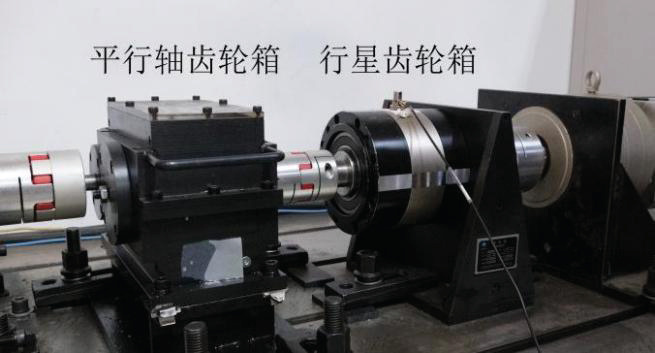
Wind Turbine Gearbox Fault Diagnosis Method Based on Improved CNN-XGBoost Fusion Model Under Gramian Angular Difference Field
Gearbox failures account for 20–30% of total wind turbine faults and incur maintenance costs equivalent to 10–15% of overall turbine value. Conventional vibration diagnostic pipelines—complementary ensemble empirical mode decomposition with singular value energy spectrum, time-varying filtering empirical mode decomposition, and Teager energy spectrum analysis—remain bounded below 90% accuracy and depend on expert-driven feature engineering that is sensitive to non-stationary operating conditions and noise. This study proposes an intelligent diagnostic architecture that converts one-dimensional gearbox vibration signals into two-dimensional images via Gramian angular difference field (GADF) transformation, preserving intrinsic temporal correlation and time-frequency structure while exploiting matrix sparsity to suppress interference. An improved convolutional neural network (CNN) extracts multi-dimensional features: a convolutional block attention module (CBAM) is embedded in the convolutional layers to weight critical channels and focus on fault-sensitive spatial regions, and a modified βc-ACONC activation function replaces ReLU to mitigate neuron necrosis and enable selective activation. The extracted composite features are then fed into an XGBoost network whose hyperparameters are optimized by an improved sparrow search algorithm (ISSA). Validation on a laboratory wind turbine gearbox dataset yields diagnostic accuracy exceeding 99%, demonstrating robust fault identification capability under complex operating conditions.
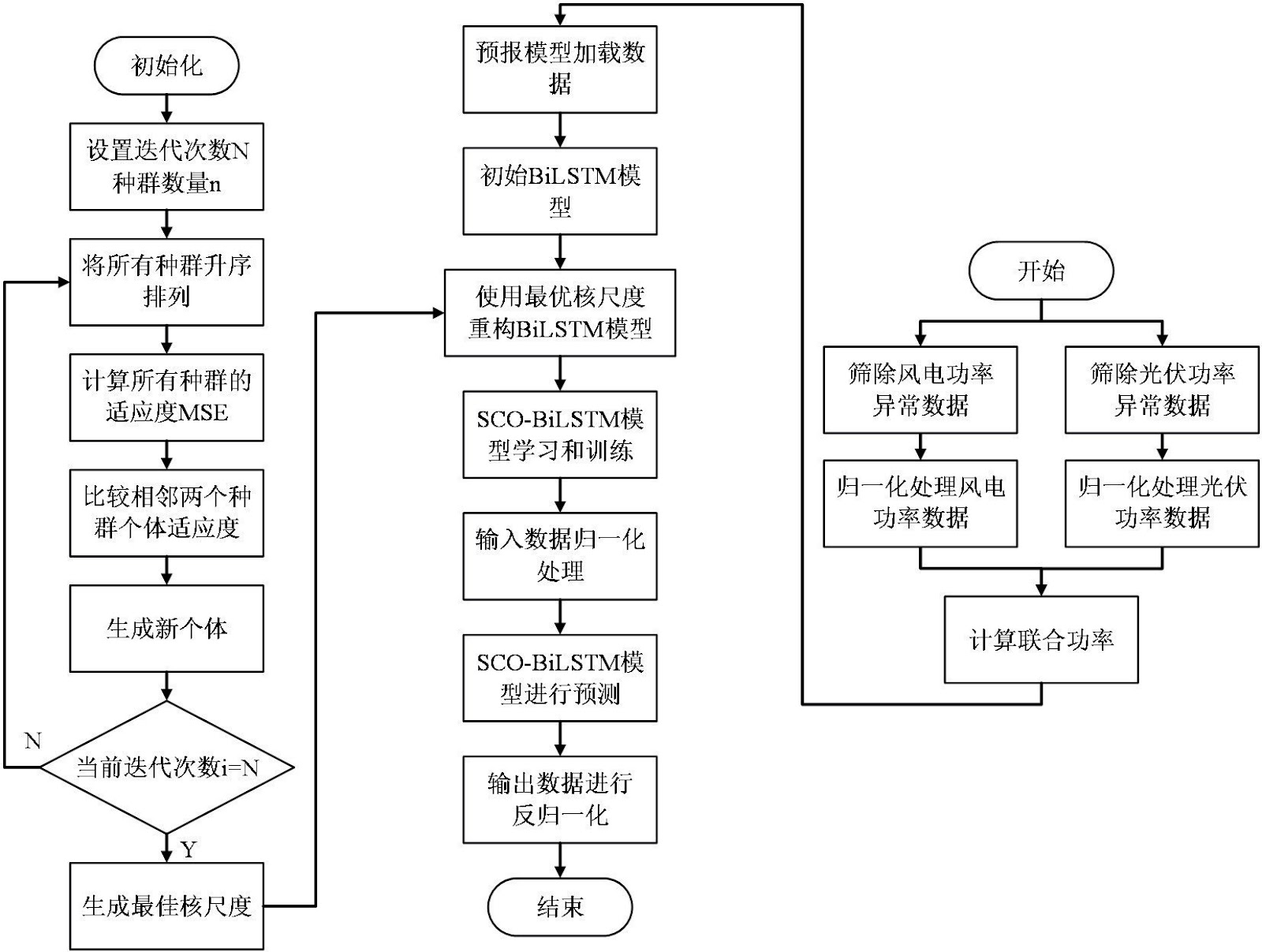
Joint Forecasting of Wind and Photovoltaic Power Considering Complementarity
The inherent spatiotemporal complementarity between wind and solar resources offers a theoretical basis for improving renewable power forecasting accuracy. This study proposes a joint wind-photovoltaic (PV) power forecasting strategy that explicitly exploits this complementarity. A bidirectional long short-term memory (BiLSTM) neural network serves as the baseline forecasting model, and a novel sorting and comparative optimization (SCO) algorithm is developed to optimize the model's hyperparameters. The SCO algorithm ranks individuals in ascending order and compares adjacent fitness values to escape local optima, a known deficiency in conventional metaheuristics such as genetic algorithms and particle swarm optimization. For wind farms and PV plants exhibiting significant complementarity, the joint forecasting strategy first aggregates their power outputs, normalizes the combined signal, and then feeds it into the optimized BiLSTM model. Experimental results demonstrate that the proposed SCO-BiLSTM model reduces the eMAPE by 10.313% compared with PSO-BiLSTM. Furthermore, joint forecasting under SCO-BiLSTM lowers the eRMSE by 27.443% relative to standalone PV power forecasting. The study also establishes that forecasting accuracy improves with stronger wind-solar complementarity but degrades as the forecasting horizon extends. These findings confirm that exploiting complementarity in joint forecasting substantially enhances predictive performance for renewable energy integration.
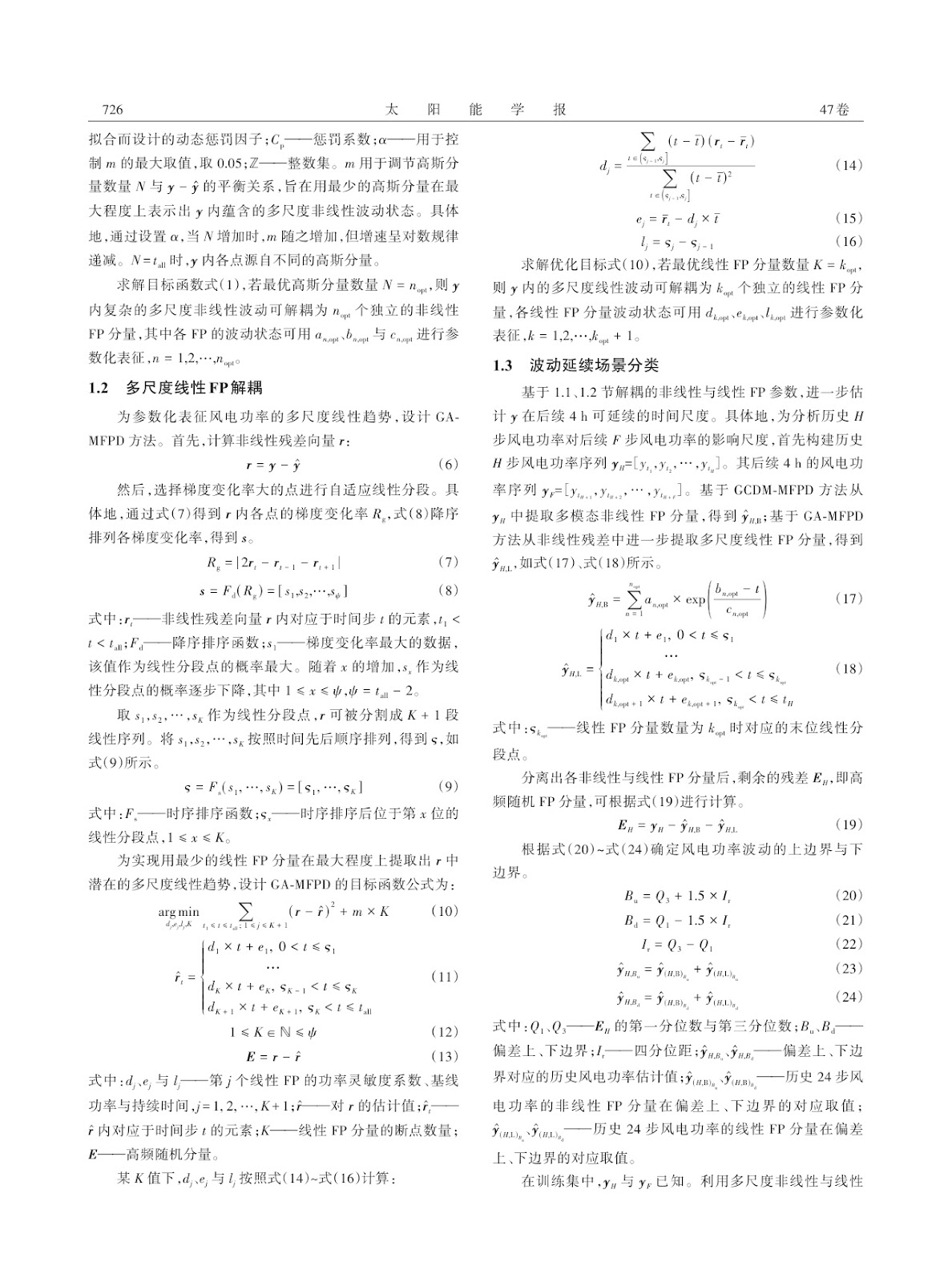
Ultra-Short-Term Wind Power Forecasting Based on Fluctuation Continuation Scenario Identification
Existing ultra-short-term wind power forecasting methods exhibit limited performance due to insufficient extraction of fluctuation information and inadequate analysis of evolution patterns. This paper proposes an ultra-short-term wind power forecasting method based on fluctuation continuation scenario identification. First, the coupling mechanism of wind power fluctuations under multiple turbulence processes is investigated, and historical wind power dynamics are decoupled into a combination of nonlinear and linear fluctuation components. A fluctuation continuation concept is introduced, and the future continuation scale of wind power fluctuations is derived from nonlinear and linear decoupling parameters, thereby classifying fluctuation continuation scenarios. A sparse neural network (SNN) oriented to high-dimensional sparse features is constructed to identify historical fluctuation continuation scenarios, and ultra-short-term power forecasting is conducted separately for each scenario. Validation using measured wind speed and power data from three wind farms shows that, compared with baseline models, the proposed model improves root mean square error (RMSE), mean absolute error (MAE), and mean absolute percentage error (MAPE) by at least 1.46%, 2.44%, and 14.67%, respectively, demonstrating superior accuracy and stability. The method addresses the limitations of signal decomposition techniques that lack physical interpretability and are sensitive to hyperparameters, and overcomes the high-dimensional sparsity challenges faced by traditional scenario identification models.
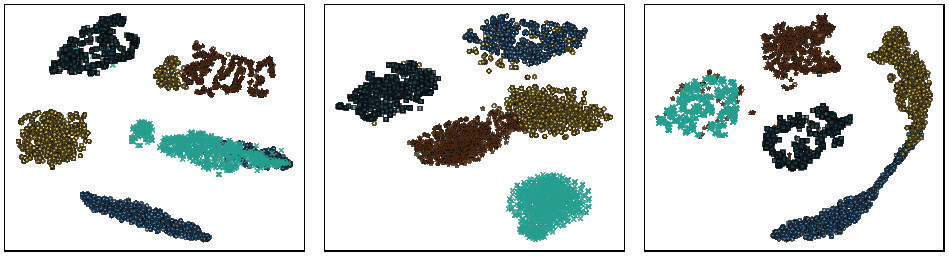
Multi-Classifier Open Adversarial Network for Rolling Bearing Fault Diagnosis in Wind Turbine Generator Systems
Rolling bearings in wind turbine generator systems operate under variable speed and load conditions that induce significant data distribution shifts between training and field data, while unknown fault modes absent from the source domain are frequently misclassified as known classes. This study proposes a multi-classifier open adversarial network (MCOAN) for open-set fault diagnosis. Within an adversarial domain adaptation framework, a K-way classifier and an additional K+1-way one-vs-all classifier independently estimate target-sample similarity to the source domain. These similarity scores drive a dynamic weighting mechanism that adaptively reweights target samples during open-set adversarial training and supplies per-sample dynamic thresholds for known/unknown discrimination, thereby promoting cross-domain alignment of shared-class features while suppressing negative transfer from unknown samples. A non-adversarial domain classifier is introduced to stabilize dynamic weight estimation. Validation on two datasets demonstrates high-precision shared-class distribution alignment and unknown-class recognition with favorable robustness. The method removes reliance on empirically preset thresholds that plague conventional open-set back-propagation approaches, where a fixed threshold of 0.5 in the binary cross-entropy adversarial loss provides no per-sample adaptivity. By coupling K-way and K+1-way similarity estimates, MCOAN achieves simultaneous known-class alignment and unknown-class separation without prior knowledge of the unknown-class cardinality, addressing a persistent bottleneck in wind turbine drivetrain condition monitoring where unanticipated bearing failure modes emerge under field conditions.
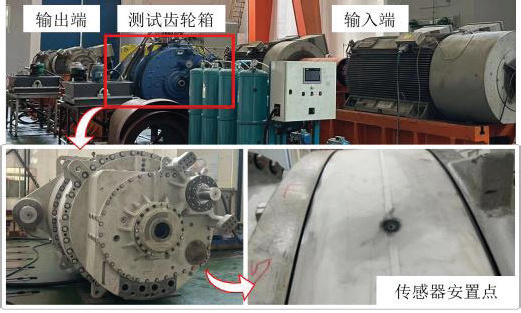
Unsupervised Automated Identification Method for Abnormal States of Wind Turbine Gearboxes
Addressing the scarcity of labeled data for training classification models in wind turbine planetary gearbox anomaly identification, this study proposes an unsupervised automated detection method. Log Mel-band energy features are extracted from raw vibration signals and fed into an unsupervised anomaly recognition model centered on a U-net autoencoder. A health-state threshold is established based on reconstruction error between model input and output, enabling anomaly identification. The method is validated using factory gearbox test data and operational data from a wind farm in Yangtouya, Shanxi. For factory gearboxes, dual validation is performed using a spectrum amplitude modulation-based signal processing method. Results demonstrate that the proposed method achieves 93.34% recognition accuracy on both factory and wind farm test sets, confirming its capability to automatically and correctly separate abnormal wind turbine gearboxes. The approach eliminates reliance on labeled fault data, offering a scalable solution for full-lifecycle health monitoring, from factory acceptance testing to in-service early anomaly detection, adaptable across different operating conditions and turbine models.
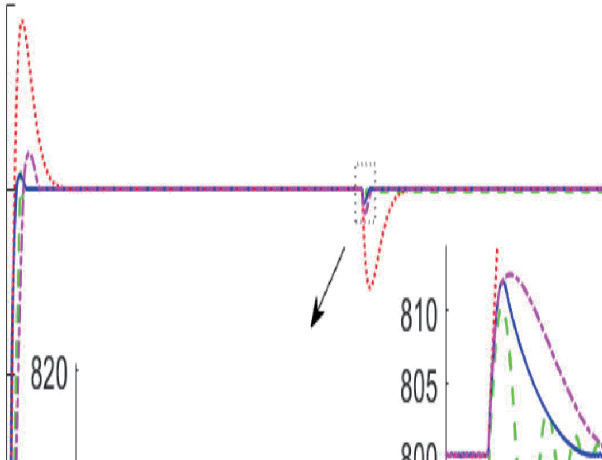
Improved Adaptive Super-Twisting Sliding Mode Control for Permanent Magnet Synchronous Motors
Adaptive super-twisting sliding mode control (ASTSMC) for permanent magnet synchronous motors (PMSM) suffers from prolonged convergence and insufficient disturbance rejection under complex operating conditions. This paper proposes an improved ASTSMC incorporating a fixed-time disturbance observer (FTDO). A power term is introduced into the adaptive super-twisting controller to accelerate convergence far from the origin, while the discontinuous sign function is replaced by a continuous h(s) function to mitigate chattering. The FTDO ensures disturbance estimation converges within a fixed time independent of initial states, overcoming the limitations of traditional and finite-time observers. The estimated disturbance is fed forward to the sliding mode controller for compensation, enhancing robustness. The FTDO design is based on an auxiliary state variable z and its derivative, with error dynamics analyzed via Lyapunov stability. Comparative simulations against conventional disturbance observers and sliding mode controllers validate the proposed strategy. The results demonstrate shorter convergence time, improved dynamic performance, and superior disturbance rejection, making the approach suitable for high-performance servo systems. The method addresses the critical need for robust, fast-response control in electric vehicles, rail transit, and aerospace applications where PMSM drives face significant uncertainties and external disturbances.